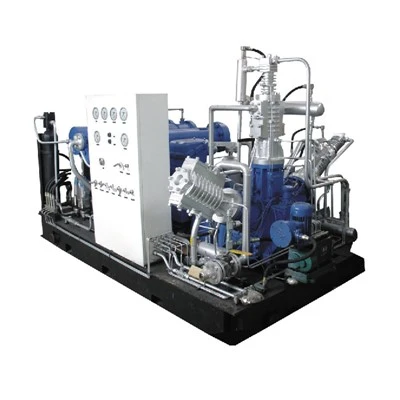
If you’re reading this, chances are you’re either in the market for an LPG gas compressor, already rely on one for your storage, transportation, or processing operations, or just curious about why some compressors run like a well-oiled machine and others leave you chasing downtime and missed deadlines. As someone who’s spent the better part of a decade supplying LPG compressors to facilities across the chemical, marine, and agricultural sectors, I’ve seen firsthand how the smallest, overlooked detail can turn a reliable workhorse into a costly headache. Today, I want to break down the key factors that shape an LPG compressor’s performance, straight from the shop floor and the field—not just textbook theory. LPG Gas Compressor
First, let’s get one thing straight: LPG isn’t just natural gas or propane in a bottle. It’s a mixture of hydrocarbons, usually propane and butane, with trace amounts of other compounds that can play dirty if you’re not prepared. That’s why the composition of the LPG itself is the first, often underrated, factor affecting compressor performance. I once worked with a small propane distributor in the Midwest who bought a used compressor that had been designed for 90% butane blends. They were using it to haul a 70% propane/30% butane mix, and within six months, they were dealing with excessive valve wear and higher energy bills than they’d budgeted. Here’s why: propane has a lower density and lower boiling point than butane. When a compressor is sized for a denser, heavier mix, it has to work harder to move the same volume of gas. That extra strain doesn’t just burn more fuel—it causes faster degradation of internal parts like pistons, valves, and cylinder walls. Even the trace contaminants in LPG matter. Hydrogen sulfide, for example, is corrosive enough to eat through copper seals in a matter of months if the compressor doesn’t have proper filtration. I always tell new customers to test their LPG blend thoroughly before committing to a compressor; it’s a 20-minute lab test that can save you thousands in repairs down the line.
Next up, operating pressure and temperature conditions. This isn’t just about what the manufacturer lists as “rated pressure”—it’s about the actual pressure swings your compressor deals with day in and day out. LPG is stored and transported under pressure, so compressors have to handle both suction pressure (the pressure of the gas coming into the unit) and discharge pressure (the pressure needed to move the gas to storage or a truck). If you’re consistently running your compressor at discharge pressure 10% above its rated maximum, you’re not just going to get worse performance—you’re risking a breakdown that could shut down your entire operation. Temperature is equally important, and it’s something a lot of operators take for granted. LPG compressors work best in moderate temperatures, because high ambient temperatures reduce the density of the incoming gas, meaning the compressor has to pump more to move the same amount. Last summer, we had a customer in Texas call us panicking because their compressor was only delivering 60% of its rated capacity. They had it placed next to a loading dock where asphalt temperatures hit 120°F, and the compressor’s cooling system couldn’t keep up. Once we adjusted the cooling vents and added a small heat shield, their capacity jumped back to normal. Even cold temperatures can be a problem, though—excessively low temps can make LPG thicker, increasing friction inside the compressor. It’s all about matching your compressor’s operating range to the actual conditions of your site, not just the ideal numbers on a spec sheet.
Then there’s maintenance and upkeep, and this is where I see the biggest gap between theory and practice. I’ve had customers tell me “my compressor runs fine, I don’t need to do anything until it breaks”—and nine times out of ten, that’s exactly when it breaks. LPG compressors have moving parts that are exposed to gas, pressure, and heat, so regular maintenance isn’t just a good idea—it’s non-negotiable. Let’s talk about lubrication, for example. The oil that keeps the compressor’s pistons and crankshaft moving smoothly isn’t a one-size-fits-all product. Using the wrong type of oil—like a standard motor oil instead of an LPG-specific lubricant—can lead to oil breakdown at high temperatures, which leaves metal parts grinding against each other and causing wear. We supply our customers with lubrication guidelines tailored to their compressor model and LPG blend, and we offer free annual checkups to make sure their oil levels and viscosity are on point. Valves are another big one. Even with proper filtration, small particles can get past and build up on valve seats over time. A valve that’s only 10% clogged can reduce a compressor’s efficiency by 15% or more, and that adds up to hundreds of dollars in wasted energy every month. Changing oil, inspecting valves, checking seals, and testing pressure and temperature sensors on a regular basis isn’t a chore—it’s how you keep your compressor performing at its best for years, not months.
Wait, and I can’t forget about the compressor’s size and design for your specific application. A lot of people think “bigger is better,” but that’s rarely true when it comes to LPG compressors. If you buy a compressor that’s too large for your daily throughput, it will cycle on and off constantly, which causes more wear on the start/stop mechanism and uses more energy than a compressor sized just right for your operation. On the flip side, a compressor that’s too small will never keep up with demand, leading to slow loading times, missed delivery deadlines, and overworking the unit until it breaks down. Design also matters for the type of work you’re doing. Marine compressors, for example, have to be designed to withstand saltwater corrosion and constant vibration from a ship’s hull. Compressors for stationary storage facilities need to be quieter and more energy-efficient for long, continuous runs, while portable compressors for construction or well service need to be lightweight and easy to transport. When a customer first reaches out to us, we don’t just show them a catalog of compressors—we ask questions: How much LPG do you move per day? Do you need it for storage, transportation, or both? Where is the unit going to be installed? What’s the ambient temperature there? That’s how we match them to a compressor that will perform for their specific needs, not just the most expensive one.
Another factor I’ve learned about over the years is gas velocity and flow dynamics. LPG is a high-pressure gas, and how it moves through the compressor’s piping and components affects its performance. If the piping between your storage tank and compressor is too small, the gas has to speed up to get through, which creates pressure drops that make the compressor work harder. If there are too many bends or valves in the line, that adds more friction and reduces the amount of gas that actually makes it to the compressor. I had a customer in Florida who installed their compressor 50 feet away from their storage tank, with three 90-degree bends in the piping. The pressure drop was so bad that their compressor could only move half the gas it was supposed to. We recommended upsizing the piping to match the compressor’s inlet and minimizing the bends, and within a week, their efficiency was back to 95%. It sounds like a small detail, but flow dynamics are the unsung hero of consistent compressor performance.

Let’s wrap this up with a note that ties all these factors together. At the end of the day, an LPG compressor’s performance isn’t determined by a single spec or a one-time purchase—it’s a combination of understanding your LPG blend, matching the compressor to your application, maintaining it regularly, and accounting for the actual operating conditions at your site. As a supplier, my job isn’t just to sell you a compressor—it’s to make sure it works for you, day in and day out, so you can focus on running your business without worrying about downtime. If you’re in the market for an LPG compressor, or if your current unit is underperforming and you need a second opinion, I’d be happy to connect you to our team of engineers and field technicians to walk through your needs. We’ve worked with operations big and small, from small local propane distributors to large marine shipping companies, and we can help you find the right solution for your needs. Don’t let avoidable factors like wrong size, poor maintenance, or untested LPG blends hold your operation back—reach out today to start your procurement conversation.
Natural Gas Compressor Series References:
- Gas Processors Suppliers Association. (2020). GPSA Engineering Data Book, 15th Edition. LPG Compressor Design and Operation.
- Compressed Gas Association. (2019). Safe Handling and Operation of LPG Compressors.
- American Society of Mechanical Engineers. (2021). Performance Test Code for Gas Compressors, PTC 10.
- Hydraulic Institute. (2018). Lubrication Guidelines for Positive Displacement Compressors.
- International Maritime Organization. (2020). Guidelines for Marine LPG Compressor Installation and Maintenance.
Shanghai Sollant Energy Saving Technology Co., Ltd.
As one of the most professional lpg gas compressor manufacturers and suppliers in China, we’re featured by quality products and good service. Please rest assured to buy bulk durable lpg gas compressor from our factory. Welcome to view our website for more information.
Address: No.215, Songri Center, Beihongqiao, Jiading District, Shanghai, China.
E-mail: info3@sollant.com
WebSite: https://www.sollant-gas.com/
