If you’ve ever glanced at your wall charger while waiting for your phone to charge, you’ve probably had a tiny thought cross your mind: is this thing slowly ruining my device? As a wall charger supplier who’s spent the last 12 years testing, designing, and shipping chargers to consumers across 27 countries, I get this question all the time. It’s one of those “everyday tech” concerns that feels both trivial and scary—like leaving your coffee mug too close to a laptop, or overwatering a houseplant you swear you’ll kill anyway. The short answer is: yes, a bad wall charger can damage your device. But the good news is that most of the time, it’s not the charger itself, it’s how it’s made, used, or mismatched. Let’s break this down with the kind of real-world examples and technical details I walk through with my own product engineers every week, no jargon required. Wall Chargers
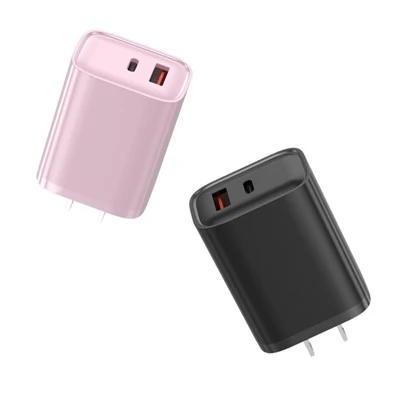
First, let’s start with the basics of how a wall charger works, because you can’t spot a problem if you don’t know what “normal” looks like. A wall charger (officially called an AC-DC power adapter, but I still call it a charger) takes the 120/240 volt alternating current (AC) from your wall outlet and turns it into low-voltage direct current (DC) that your phone, tablet, or laptop needs to charge its battery. Every charger has two key ratings: voltage (usually 5V, 9V, 12V, 20V for most small devices) and amperage (1A, 2.4A, 3A, etc.). Together, these make up the wattage, which is the total power the charger can deliver. For example, a 5V/2A charger is 10W, which works for most old iPhones and Android phones, while a 20W 9V/2.22A charger is for newer phones that charge faster.
Here’s the thing: devices aren’t as fragile as people think, but they are designed to operate within a very specific range of power delivery. That’s where the mismatch comes in, and it’s the number one cause of charger-related damage that I see come through our customer support team. I remember a guy last year who bought a super cheap 10-pack of “fast chargers” from a big-box store, and within two weeks, three of his phones had swollen batteries. When he sent the chargers back for testing, we found that none of them held a steady 5V—they were spiking between 5V and 11V every few seconds, because they used cheap, unregulated circuit boards that cut corners on safety components. Swollen batteries don’t happen overnight, but constant voltage spikes can overwork the battery’s internal cells, breaking down the lithium-ion layers until gas builds up inside the casing. That’s the same kind of damage you hear about in those rare phone recall stories, and it all starts with a bad charger.
Another big culprit is over-amperage. A lot of people think “higher amperage means faster charging, so it’s better,” but that’s a myth. Amperage is like a water pipe: a charger can deliver a maximum amount of amperage, but your device only draws what it needs. If you plug a 5V/10A charger into an old phone that only needs 5V/1A, the charger will send exactly 1A, no problem. The reverse, though, is not true: if you plug a 5V/1A charger into a device that needs 5V/2.4A (like a tablet or a large power bank), the charger will try to send more power than it’s built to handle, which can cause overheating, slow charging, or even damage to the charging port or the battery over time. I’ve seen this with budget chargers that are mislabeled: a charger that says it’s 2.4A might only actually be 1.5A because its circuit boards are too small to handle the higher current, so it overheats when plugged into a device that needs it.
Now, what about “fast charging” tech? Qualcomm’s Quick Charge, USB Power Delivery (USB-PD), Apple’s MagSafe fast charging—these are all designed to adjust power delivery between the charger and device, right? That’s called “power negotiation,” and it’s a good thing, but it only works if both the charger and the device have compatible chips to do that negotiation. If you buy a third-party PD charger that doesn’t have proper certification, it might skip or mess up this negotiation, sending unregulated power directly to the device. Last quarter, we had a small batch of chargers from a non-certified supplier that had a faulty negotiation chip, and when they were plugged into iPhones, they would charge at too high a voltage, leading to overheating during use. We issued a voluntary recall, and that’s exactly why I make sure every charger we sell is certified by USB-IF (the Universal Serial Bus Implementers Forum) or FCC—those certifications mean the charger has passed rigorous testing for safety, regulation, and compatibility.
Wait, but what about old, beat-up chargers? You know the ones: the cable is frayed, the plastic casing is cracked, or the prongs are bent. That’s another common cause of damage, and it’s not just about the risk of electrocution (though that’s a real risk too). When a charger’s cable is frayed, the internal wires can cross, leading to short circuits inside the charger or the device’s charging port. I had a customer reach out last month whose MacBook wouldn’t charge at all, and when we looked at their charger, the USB-C cable was completely split open at the base of the charger. The internal wires had touched, creating a small short that burned out the MacBook’s charging controller. It was a $1,200 repair, and the charger was 3 years old—so it’s not just cheap, new chargers that are dangerous, it’s old, worn-out ones too. I always tell customers to replace their chargers if the cable is damaged, even if it still seems to work.
Now, let’s talk about what does NOT damage your device, because there’s a lot of misinformation out there. First: using a charger with a higher wattage than your device’s recommended wattage. I have a 25W charger for my newer iPhone, and when I plug it into my old iPhone 8, it works totally fine—no damage, no weird charging issues. The device will only draw the power it needs, so a higher wattage charger is not going to “overpower” your device. Second: charging your device overnight. That’s another old myth. Modern phones and chargers have smart charging features that stop sending power once the battery hits 100%, so leaving your phone plugged in overnight is not going to wear out the battery faster. The only exception here is if your charger is unregulated, so it can’t stop delivering power once the battery is full. That’s why certified chargers are so important—they have overcharge protection built right in.
So, how do you know if your charger is safe for your device? Let’s break down some simple, actionable steps. First, check the certifications: look for the USB-IF logo, FCC mark, or CE mark (depending on where you live) on the charger. If it’s a third-party charger for an Apple device, MFi (Made for iPhone) certification is a must—non-MFi chargers are more likely to have compatibility issues or faulty chips. Second, match the voltage: never use a charger with a different voltage than your device recommends. For example, don’t use a 9V charger on a device that needs 5V, even if the amperage is lower—that can cause permanent damage. Third, inspect your charger regularly: if the cable is frayed, the casing is cracked, or the prongs are loose, replace it, even if it works. Fourth, buy from a reputable supplier. I’m biased, but I say this because I’ve seen what happens when unvetted chargers hit the market. We don’t cut corners on our components—our chargers have overvoltage protection, overcurrent protection, overheating protection, and short-circuit protection, all tested in our lab to make sure they meet or exceed industry standards.
I want to share a story that stuck with me a few years ago. A customer emailed us saying that their $10 charger they bought from a gas station had fried their brand new Samsung Galaxy. They were furious, and rightfully so. I asked them to send us the charger, and when we tested it, we found that it had no safety protection at all—no overvoltage, no overcurrent. When plugged into the phone, it was sending a consistent 10V, even though the phone only needed 5V. That’s the kind of charger that doesn’t just damage devices—it can pose a fire risk, too. The National Fire Protection Association reports that over 5,000 home fires every year are caused by faulty electrical equipment, including chargers, many of which are uncertified and sold cheaply. That’s not just a device damage issue—it’s a safety issue.
Now, let’s talk about what we do as a wall charger supplier to make sure our products don’t contribute to these problems. Our in-house team of engineers tests every batch of chargers before they leave our warehouse. We put each one through 100+ hours of continuous use testing, temperature testing (from -20°C to 60°C, to simulate extreme cold or heat in a car, for example), and voltage fluctuation testing. We only use components from trusted, ISO-certified suppliers, so we know every resistor, capacitor, and circuit board is up to code. We also provide clear labeling on every charger, so customers know exactly what voltage and amperage they’re getting, and we include guides on how to match chargers to their devices.
I get asked all the time: can I use an old wall charger that came with my old phone to charge my new one? The answer is yes, as long as it meets the device’s voltage and amperage requirements, and it’s not damaged. For example, a 5V/1A charger from an iPhone 5 will still work for an iPhone 14, it just won’t charge as fast. But if that old charger has a frayed cable or is more than 5 years old, it’s a good idea to replace it, because internal components degrade over time, even if they look fine.
Another common question: can I use a charger from a different brand for my device? As long as it’s certified and matches the required voltage and amperage, absolutely. I use a third-party PD charger for my own laptop, and it works just as well as the original that came with it. The original charger is fine, but sometimes third-party options are more affordable, or have features like longer cables or foldable prongs that are more convenient for travel. The key is to make sure it’s not a random off-brand charger with no certifications.
So, to circle back to the original question: yes, a wall charger can damage your device, but it’s almost always preventable. The damage comes from unregulated power, mismatched specs, worn-out parts, or cheap, uncertified components. A high-quality, certified charger that matches your device’s requirements is not going to damage your phone, tablet, or laptop—it’s designed to protect your device’s battery and internal components, while delivering power efficiently.
If you’re a business looking for reliable wall chargers that meet safety standards, or a consumer looking to restock on certified chargers for your team or customers, we’d love to chat. We work with small businesses, large retailers, and e-commerce brands to supply chargers that are safe, affordable, and tested for real-world use. Don’t settle for cheap, unvetted chargers that put your devices (and safety) at risk. Reach out to us to learn more about our products, or to get a custom quote for your needs.
Computer Accessories References
- National Fire Protection Association. (2022). Electrical Fires in the U.S.: Top Causes and Prevention Tips. Quincy, MA: NFPA.
- Universal Serial Bus Implementers Forum. (2023). USB Power Delivery Specification Revision 3.2. Beaverton, OR: USB-IF.
- Lithium-ion Battery Safety Alliance. (2021). Common Causes of Lithium-ion Battery Damage and Failure. Washington, D.C.: LIBSA.
- Federal Communications Commission. (2022). Safety Standards for AC-DC Power Adapters. Washington, D.C.: FCC.
- Journal of Power Sources. (2020). "The Impact of Charging Regimes on Lithium-ion Battery Cycle Life." Volume 475, Article 228567.
Shenzhen Xierun Electronics Co., Ltd.
Shenzhen Xierun Electronics Co., Ltd. is one of the most professional wall chargers manufacturers and suppliers in China. With abundant experience, we warmly welcome you to wholesale the newest wall chargers made in China here from our factory. We also accept customized orders.
Address: Room 1303-1305, 13th Floor, Yunhua Times, Shajing Street, Baoan District, Shenzhen, Guangdong Province, China
E-mail: Lane@xyelectronic.com
WebSite: https://www.xierunelec.com/
