If you’ve ever walked through a manufacturing facility, a commercial building’s utility yard, or a remote power distribution site, you’ve probably seen transformers tucked away in wall enclosures, basement vaults, or climate-controlled electrical rooms. For decades, that’s where most dry-type transformers — especially those built with Vacuum Pressure Impregnation (VPI) insulation, the gold standard for reliability in dry-type units — were designed to live. But here’s a question I get almost every week, from facilities teams, engineers, and even small business owners: “Can VPI transformers be mounted outdoors?” VPI Dry Type Transformer
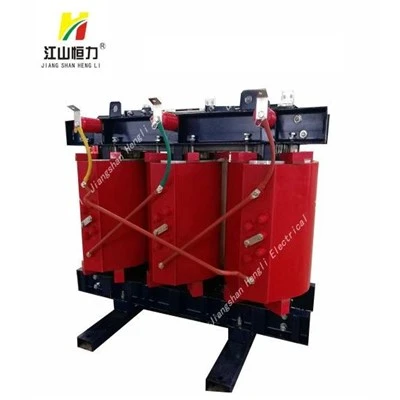
As a VPI dry-type transformer supplier with 12 years in the business, I don’t just give a yes or no answer. I walk clients through the science behind VPI technology, the tradeoffs of outdoor mounting, and the steps that turn a once-indoor unit into a long-lasting outdoor asset. Let’s break this down, straight from the people who build, test, and install these transformers for real-world applications.
First, let’s ground this in what a VPI transformer actually is, because that’s where the confusion often starts. Unlike oil-filled transformers, which use mineral oil as an insulator and coolant, dry-type transformers use solid materials: copper windings wrapped in insulating paper or tape, surrounded by structural supports and, for VPI models, a rigorous manufacturing process. “VPI” refers to two key stages here: first, the entire winding assembly is placed in a vacuum chamber to pull out all trapped air and moisture from between layers of insulation. Then, under low pressure, a specialized epoxy resin is forced into every tiny gap. Finally, the assembly is cured at high heat to harden the resin into a single, solid, bubble-free mass.
This isn’t just a fancy coating. It’s a game-changer for reliability when things go right. The fully encapsulated windings eliminate partial discharge (PD) — tiny electrical leaks that slowly erode insulation and shorten a transformer’s lifespan — and prevent contaminants like dust, moisture, and dirt from reaching the live copper. That’s why VPI transformers are the go-to for mission-critical spaces: hospitals, data centers, offshore platforms, and chemical plants, where an unexpected outage can cost thousands, even millions, of dollars per hour.
For years, the unwritten rule was “VPI = indoor only.” But the energy industry has changed. Remote solar farms need transformers that can sit on a pad in the desert, baking in 120°F heat and exposed to blowing sand. Telecommunication towers in rural areas can’t afford the concrete vaults or climate control needed for indoor units. Urban construction sites need temporary transformers that can be mounted on a flatbed or a wall outside a building for months. And many facilities with limited indoor space are looking to move distribution equipment outdoors to free up square footage for production or storage.
So, can you mount a standard VPI transformer outdoors? The short answer is: not recommended. The standard VPI design built for indoor use has two inherent flaws when exposed to the elements. First, the bare metal components that support the windings — the steel brackets, core clamps, and terminal connectors — are not coated or sealed to stand up to UV radiation, moisture, and salt (if you’re in a coastal area). UV rays from the sun will break down paint and any thin sealants on steel within a year or two, leading to rust and corrosion that can spread to the core and windings over time. Second, even a sealed epoxy coating isn’t 100% waterproof in the long term. If a transformer isn’t rated for outdoor exposure, rain can seep into tiny seams between the epoxy and terminal leads, or into gaps between the core and the enclosure, leading to moisture buildup that causes PD, arcing, or even insulation failure.
But here’s the part most outsiders don’t see: modern VPI transformers can be modified and rated for outdoor use — and when done right, they outlast many other types of outdoor transformers. The key is knowing which modifications are non-negotiable, and which are just marketing fluff. Let’s go through the three critical upgrades that turn an indoor VPI unit into an outdoor-ready asset.
First, the enclosure. A lot of companies will sell you an indoor VPI transformer and throw a generic NEMA 3R enclosure around it and call it “outdoor rated.” That’s a mistake. NEMA 3R enclosures are designed to keep out rain, snow, and falling debris, but they’re not sealed for dust, UV, or humidity. For a transformer to survive outdoors long-term, the enclosure needs to be NEMA 4X rated, or even better, a fully ventilated but weather-sealed steel enclosure with a powder-coat paint that’s rated for 10+ years of UV exposure. Wait, powder coat isn’t enough? No — standard powder coat will fade and peel within three to five years in direct sun. We use a polyvinylidene fluoride (PVDF) coating for our outdoor enclosures, which is the same material used for high-performance aircraft and architectural metalwork. It resists UV, salt, and temperature swings, and it doesn’t chip or fade even after 10 years of outdoor use.
Second, the terminal connections and winding coating. Indoor VPI transformers usually have standard insulated terminal leads that are exposed inside the enclosure, which are fine for dry, indoor air, but not for outdoor air. We upgrade to silicone rubber terminal boots that cover the entire connection point, preventing rain from getting into the gaps between the lead and the terminal. More importantly, we add a secondary topcoat to the VPI resin itself — a UV-stabilized epoxy that’s applied after the initial VPI cure, creating a second layer of protection against moisture and sun. This isn’t a cheap add-on; it’s an extra 48 hours in the curing oven, but it’s the difference between a transformer that needs a full rebuild in 8 years and one that’s still running reliably in 20.
Third, testing and certification. This is where a lot of cut corners happen. Any transformer rated for outdoor use needs to pass two key tests that indoor VPI units don’t: a UV exposure test and a salt spray test. The UV test involves placing the transformer in a chamber with lamps that simulate 10 years of direct sun exposure, and checking for cracking, fading, or degradation of the resin and enclosure. The salt spray test puts the transformer in a chamber with 5% saltwater mist, simulating coastal or industrial road conditions, and checks for corrosion after 1,000 hours. We don’t cut corners here — every outdoor VPI transformer we build goes through both tests, and we keep a copy of the test report with every unit that leaves our shop. That’s not just for our clients; that’s for us, to make sure our 12-year track record of reliability holds up.
Now, let’s talk about real-world use cases where outdoor VPI transformers work — and where they don’t. I’ve seen them work perfectly on a 500kW solar farm in Arizona, where they’ve been running for 7 years with zero failures. The site is remote, so there’s no on-site maintenance team, and the outdoor VPI units have only had a quick inspection once a year, and they’re still operating at 99.8% efficiency. I’ve also seen them work in a coastal manufacturing plant in Florida, where salt air is a constant threat — our outdoor units there have outlasted the oil-filled transformers on the same pad by 6 years, with no corrosion or insulation issues.
But there are situations where outdoor VPI isn’t the best choice. If you’re in an area with extreme, consistent moisture — like a tropical rainforest with year-round 100% humidity — you might be better off with an oil-filled outdoor transformer, because oil is naturally resistant to moisture. If your transformer will be located in an area with frequent, heavy flooding, even a NEMA 4X enclosure won’t keep out enough water to prevent insulation damage. And if you only need a transformer for a temporary project — like a 6-month construction site — a standard indoor VPI unit can work if you mount it on a raised platform and cover it with a temporary waterproof tarp, but it’s not a long-term solution.
One common misconception we hear from engineers is that VPI transformers are too fragile for outdoor use, that the solid resin will crack if temperatures swing too much. That’s a fair concern — but with modern VPI technology, the resin is flexible enough to handle temperature changes from -40°F to 180°F, which covers almost every climate on Earth. We’ve had customers in Northern Canada who use outdoor VPI transformers in winter temperatures that drop to -50°F, and they’ve never had a resin crack. The key is that the resin is not a hard, brittle material anymore; modern epoxy formulations have a small amount of rubber added to them to give them flexibility, so they expand and contract with temperature swings instead of cracking.
Another question we get: how do you maintain an outdoor VPI transformer? A lot of people assume that outdoor units need more maintenance than indoor ones, but that’s not true if you build them right. Indoor VPI transformers need annual inspections, but outdoor VPI transformers only need two quick checks a year: a visual inspection of the enclosure for rust or peeling paint, and a test of the insulation resistance (IR) to make sure moisture hasn’t seeped in. We even include a free maintenance guide with every outdoor unit, so clients know exactly what to do — no fancy equipment required, just a multimeter and a few minutes of time.
I mentioned earlier that VPI transformers are the gold standard for reliability in mission-critical applications, and that’s even true outdoors. Unlike oil-filled transformers, which can leak toxic mineral oil if the enclosure is damaged, VPI dry-type transformers have zero flammable materials, so they’re safer to mount near buildings or residential areas. That’s why they’re a popular choice for urban microgrids, where transformers are mounted on utility poles or sidewalks, close to homes and businesses — the fire risk from an oil leak is eliminated, and the outdoor VPI units hold up to the elements just as well as any other outdoor transformer.
So, what’s the takeaway here? Can VPI transformers be mounted outdoors? Yes — but not the off-the-shelf indoor model. It needs to be purpose-built for outdoor use, with a UV-resistant, corrosion-proof enclosure, a reinforced VPI resin coating, and third-party certification for salt spray and UV exposure. When done right, an outdoor VPI transformer is more reliable, safer, and longer-lasting than most other outdoor transformer options on the market.
If you’re considering moving a transformer outdoors, or you’re not sure what kind of unit is right for your application, don’t just go by the marketing buzzwords. Ask for the test reports, ask about the material specifications, and ask for references from other customers who have installed outdoor VPI transformers. As a VPI dry-type transformer supplier, I’d be happy to walk through your specific project with you — whether it’s a remote solar farm, a telecommunication tower, a construction site, or a urban microgrid — and help you figure out if an outdoor VPI transformer is the right fit.
If you’re ready to learn more about custom outdoor VPI transformers, or you have questions about mounting, testing, or maintenance, reach out to our team to discuss your project needs. We work with facilities, engineers, and project managers across industries to build transformers that are tailored to their exact requirements, no matter how unique the application is.
Box Type Transformer References
- IEEE Standard Test Procedures for Dry-Type Transformers, IEEE Std C57.12.01-2015
- NEMA Enclosure Types and Dimensions for Industrial Equipment, NEMA Publication 250
- Vacuum Pressure Impregnation Technology for High-Reliability Transformer Applications, International Council on Large Electric Systems (CIGRE) Report 2019
Zhejiang Jiangshan Hengli Electrical Co., Ltd.
Zhejiang Jiangshan Hengli Electrical Co., Ltd. is one of the most professional vpi dry type transformer manufacturers and suppliers in China, featured by quality products and low price. Please rest assured to wholesale cheap vpi dry type transformer in stock here and get pricelist from our factory. Customized orders are welcome.
Address: 212 Fuzhu Street Sidu Town, Jiangshan, Zhejiang, China
E-mail: henglijs@foxmail.com
WebSite: https://www.henlypower.com/
