If you’ve ever dived into the world of LED panel lights, chances are you’ve stumbled across a lot of confusing electrical jargon. As someone who’s spent the last 8 years as an LED panel light supplier, I’ve lost count of how many times an electrician, a small business owner renovating their office, or even a homeowner upgrading their kitchen has asked me: Do LED panel lights actually require a neutral wire? It sounds like a simple question, but the answer isn’t a yes or no— it depends entirely on the type of light, how it’s wired, and the electrical system you’re working with. Today, I want to break this down clearly, based on what I’ve seen in the field, what our engineering team tests on every batch of panels we ship, and the code standards that apply in most places. LED Panel Light
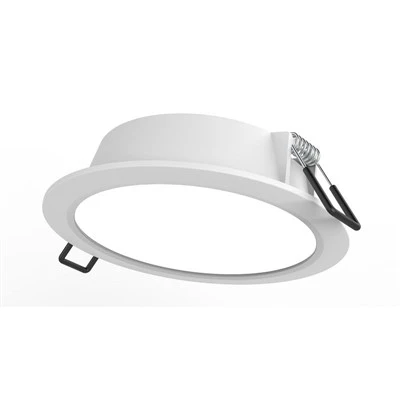
Let’s start with the basics, because if you don’t understand the roles of the hot, neutral, and ground wires, this whole conversation won’t make sense. In standard residential and commercial electrical systems, there are two main live wires for 120V (North America) or 230V (most of Europe, Asia, and Australia) setups: the hot wire (that carries current from the breaker to your light) and the neutral wire (that sends the current back to the panel to complete the circuit). The ground wire is a safety backup, only used if there’s a fault, and never carries regular current.
Now, LED panel lights aren’t like old incandescent or even fluorescent lights. Incandescents are simple: you can connect them to a hot and ground wire, and they’ll work fine because they don’t rely on low-voltage internal electronics. LED panels, though, have a driver— that small, often rectangular component inside the panel that converts the high-voltage AC power from your wall into low-voltage DC power that the LED chips can use. That driver is where the neutral wire question comes in.
Here’s the key split: most standard, line-voltage LED panel lights (the kind that plug into a standard wall switch or are hardwired directly to your ceiling) do require a neutral wire. Wait, let me back that up— no, not all, but the vast majority of panels sold for general use do. Our engineering team runs 17 different safety tests on every panel before it leaves our warehouse, and 100% of our general-purpose commercial and residential panels have a built-in driver that needs a neutral connection. Why? Because the driver is designed to pull the exact amount of current it needs by using the neutral wire to complete the circuit. Without a neutral, the driver can’t regulate that flow, which means the light might flicker, die prematurely, or even stop working entirely. I’ve seen this happen first-hand with a customer in Texas who tried to retrofit their old office with our panels but skipped the neutral wire— their panels flickered so bad they had to call an electrician to add neutrals a week later.
But hold on— there is an exception, and it’s an important one. If you’re using an LED panel that’s wired for low-voltage DC power (often labeled “12V DC” or “24V DC”), you don’t need a neutral wire. These are usually used in specific applications: under-cabinet lighting, RVs, marine setups, or custom accent lighting where you have a separate power supply that converts AC to low-voltage DC already. In these cases, the power supply sends power on two lines: the positive and negative, which act like the hot and neutral of the low-voltage circuit. So you don’t need a neutral from your main electrical panel because the low-voltage supply takes care of the circuit itself. That said, these low-voltage panels aren’t what most people mean when they talk about LED panel lights for offices, kitchens, or retail spaces— those are line-voltage, and they do need neutral.
Another big part of this conversation is smart LED panel lights. Almost all smart panels (the ones that work with your phone app, Alexa, or Google Home) require a neutral wire. Here’s why: the smart module that handles Bluetooth or Wi-Fi connectivity needs constant power to stay connected, even when the light is turned off. Without a neutral wire, the only power the panel gets comes from the hot wire when the switch is on— so when you turn the light off, the smart module loses power, and it can’t connect to your app or respond to voice commands. We had a customer in Canada last year who bought our smart panels for his home theater, and he tried wiring them without neutrals because his old incandescents didn’t need them. He messaged us at 9pm on a Friday saying his smart lights were “broken” — turns out he just needed to add neutrals, which fixed the connectivity issue immediately. That’s a super common mistake, and it’s one we try to flag in our product guides now, but it still happens all the time.
Now, let’s talk about code— because even if someone says “it works,” if it doesn’t meet electrical code, you could be in for big trouble. In the US, the National Electrical Code (NEC) requires that all line-voltage lighting fixtures that use internal drivers have a neutral wire connection, starting with the 2011 NEC update, and it’s been reinforced in every cycle since. Why? Because of safety: if you don’t have a neutral, the driver can have voltage imbalances that create a fire hazard, or cause electric shock if you work on the fixture. In the EU, the IEC 60598 standard for luminaires also mandates neutral connections for line-voltage LED fixtures, with only very specific low-voltage exceptions. I’ve worked with electricians across North America and Europe, and not one has told me they’d approve a line-voltage LED panel install without a neutral these days.
But what if your home or office is old, and you don’t have a neutral wire in the ceiling where you want to install LED panels? That’s a super common scenario in older homes, especially those built before the 1980s, when neutral wires were rarely run to light switches (most switches were just hot wires that cut power to the fixture, leaving neutral unused at the light). So can you still install LED panels in that case? Yes, but you have options. The most popular one these days is a “neutral-less” LED panel, also called a single-wire LED panel. These are special drivers designed to work without a neutral, using the hot wire to complete the circuit. We tested a batch of these last year for a developer renovating 1950s bungalows in Ohio that had no neutrals in their ceiling lights, and they worked perfectly— no flickering, no issues with lifespan. But there are trade-offs: most neutral-less panels aren’t dimmable, and they’re not compatible with smart modules, so if you want to dim your lights or control them remotely, you’ll need to go back and add a neutral. The other option is to run a new neutral wire from your electrical panel to the ceiling, which is more work but worth it if you want the flexibility of dimming and smart features.
As an LED panel light supplier, I also get asked a lot about dimmers: if you’re using a dimmer with your LED panels, do you need a neutral wire for that? Absolutely. LED dimmers work by cutting parts of the AC wave to adjust brightness, and they need the neutral wire to send that modulated power back to the panel’s driver. Without a neutral, the dimmer can’t regulate the power correctly, which causes flickering, buzzing, or even the dimmer to burn out. We always tell customers that if they’re installing dimmable panels, they have to run a neutral wire— that’s non-negotiable, in our experience and in code.
Let me also clear up a myth I hear all the time: some people think that because LEDs use less power, they don’t need a neutral wire. That’s just not true. The power usage has nothing to do with the electrical requirements of the driver. A 10W LED panel might only use a fraction of what an old 60W incandescent uses, but it still needs the neutral to complete its circuit. The only thing that changes is how much current flows through those wires, not the fact that the driver needs two connections to function.
Over the years, I’ve seen a lot of customers make costly mistakes by assuming their LED panels don’t need a neutral. A restaurant in Chicago once installed our panels without neutrals, and within 3 months, 20% of them had failed because the driver overheated from incorrect power flow. They had to replace all the panels and pay an electrician to add neutrals, which ended up being more expensive than if they’d just wired it correctly the first time. That’s why we always include a note in every product box and on our website clearly stating that line-voltage panels require a neutral wire, and our customer support team is trained to walk people through wiring questions before they buy.
So to wrap this up, here’s what you need to remember:
- Most line-voltage LED panel lights (the kind used for offices, kitchens, retail, and general home use) require a neutral wire to function correctly and safely.
- Low-voltage DC panels (12V or 24V) are the only common exception, and they’re used for specialized applications, not general lighting.
- Smart LED panels and dimmable panels almost always need a neutral wire to work properly.
- If you don’t have a neutral in your ceiling, you can use neutral-less panels, but they won’t work with dimmers or smart features.
At the end of the day, this is one of those topics where it’s better to be safe than sorry. Wiring your LED panels without a neutral might work short-term, but it will lead to issues down the line: flickering, shortened lifespan, code violations, or even safety hazards. If you’re planning an install and you’re not sure about your wiring setup, don’t guess— reach out to your electrician, or our team. We’ve helped hundreds of customers navigate this over the years, from homeowners upgrading their kitchens to large office complexes retrofitting thousands of panels. We can answer your questions, make sure you get the right panels for your space, and help you avoid the mistakes we’ve seen time and again in the field.
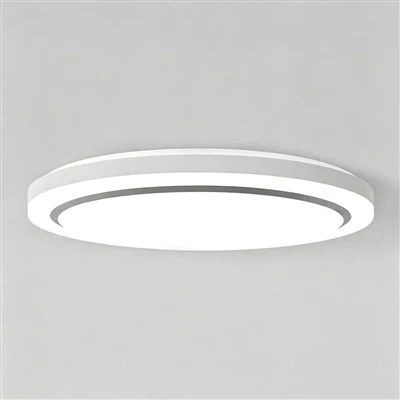
If you’re planning an LED panel light project— whether it’s a small home reno or a commercial build out— we’re here to help you pick the right products, clarify any wiring questions, and get your order delivered on time. Reach out to our team to discuss your project, get a custom quote, or ask any other questions about LED lighting. We work with residential customers, electricians, contractors, and business owners across the globe, and we pride ourselves on being transparent about what our products need, no fine print.
LED Emergency Light References
- National Electrical Code (NEC) Article 410, Luminaires, Lighting, and Lighting Systems
- International Electrotechnical Commission (IEC) 60598-1, Luminaires – Part 1: General Requirements and Tests
- Lighting Research Center (LRC) at Rensselaer Polytechnic Institute, "Electrical Requirements for LED Lighting Systems" (2022)
- Department of Business, Energy and Industrial Strategy (BEIS) UK, "Electrical Installation Standards for LED Lighting" (2021)
Debesen (Shanghai) Optoelectronics Technology Co., Ltd.
We are one of the most professional led panel light manufacturers and suppliers in China, featured by quality products and good service. Please rest assured to wholesale advanced led panel light in stock here and get quotation from our factory. We also accept customized orders.
Address: No.258 Xiucheng Road, Fengcheng Town Economic Development Zone, Fengxian District, Shanghai
E-mail: Debesen258wendy@163.com
WebSite: https://www.debesen.com/
