If you’ve ever worked with commercial reverse osmosis (RO) systems for water treatment—whether you’re a plant manager, facilities engineer, or anyone who keeps industrial water running—you’ve probably stared at the setup and wondered: Do I really need that big plastic storage tank next to the RO skid? I get it, space is tight, budgets are always squeaky, and every extra piece of equipment feels like another thing to maintain. As a commercial RO membrane supplier who’s talked to hundreds of people in this exact spot, I’m here to break this down straight—no fancy jargon, no sales fluff, just the hard truth about whether that storage tank is non-negotiable, or just a leftover from old-school system designs. Commercial RO Membrane
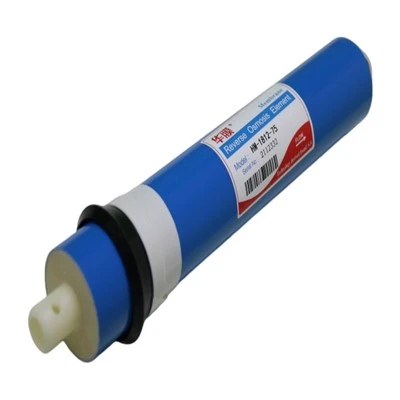
First, let’s start with the basics to make sure we’re on the same page. Commercial RO systems don’t make water instantly, right? They take in feed water, push it through semipermeable RO membranes to strip out contaminants, and produce permeate (the clean water) and concentrate (the waste stream) at a pretty consistent rate. Most standard commercial RO skids I sell pump out between 500 to 10,000 gallons per hour (GPH), depending on their size. Now, what happens if you don’t have a storage tank? That permeate has to go straight to wherever it’s used—say, a food and beverage line that needs 24/7 clean water, or a process that dips in use. If your demand drops for even 10 minutes—like a packaging line pausing to switch product, or a lab waiting to use water for tests—your RO system just keeps cranking out clean water that has nowhere to go. What then? A lot of people think, “I’ll just turn the system off until demand picks up,” but that’s a big no for RO membranes.
Wait, why is turning an RO system off bad for the membranes? Let’s keep it simple. RO membranes are thin, delicate filters—most are made of polyamide, right? When they’re running, there’s constant water flow across their surface that flushes away the tiny contaminants that build up on them (that’s called fouling, and it’s the #1 reason RO membranes fail early). If you shut the system down, that flow stops. The concentrate (the salty, dirty waste water) sits on the membrane surface for hours, and bacteria, minerals, and organic gunk starts to stick. Even worse, if the water sits stagnant, it can develop biofilm—those slimy bacteria colonies that are almost impossible to scrub off without strong chemicals, which then shorten the membrane’s lifespan by 30-50% in a lot of cases. I’ve seen this happen way too many times: a customer skips the storage tank, turns their RO off overnight, and by month 3, their permeate quality drops so much they have to replace membranes 6 months early. That’s way more expensive than buying a small storage tank upfront.
But wait—what if your demand is perfectly steady, 24/7, no dips or pauses? Can you skip the tank there? I’ve had a few customers with that setup—like a small medical facility that uses exactly 2,000 GPH of pure water around the clock, no weekends off. In that case, you could technically run the RO directly to use, but it’s still risky. What if a pump fails? What if there’s a power blip that knocks the system offline for 15 minutes, and your whole process has to shut down? For most commercial applications, uptime is non-negotiable. A food plant can’t stop its processing line for an hour because of an RO glitch; a pharmaceutical lab can’t waste a batch of tests because of bad water. The storage tank acts as a buffer here—so even if the RO has a 10-minute hiccup, you’ve got clean water to keep operations running.
Now, let’s talk about the counterargument: “Storage tanks add maintenance. They take up space. They’re another thing that can leak.” That’s fair. I won’t lie, a cracked storage tank can be a hassle, but modern commercial storage tanks (the ones we supply to go with our RO membranes) are made of food-grade plastic or stainless steel, with built-in level sensors that automatically turn the RO on when the tank is low and off when it’s full. That’s automated—you never have to manually adjust it. And compared to the cost of membrane replacement, or a full system shutdown, the tank’s maintenance is minimal: just a simple rinse once a quarter, maybe checking the gaskets for leaks. We even supply pre-assembled skids that pair RO membranes with a matched storage tank, so you don’t have to worry about mismatched parts or weird installation issues.
Wait, another thing I hear a lot: “Why not just run the RO at a smaller size to match demand, and never have to shut it off?” Let’s do the math here. Suppose your peak demand is 1,000 GPH, and average demand is 400 GPH. If you size the RO to run at 1,000 GPH nonstop, that’s overproducing water 60% of the time. What happens to that extra water? It goes to drain, which is not only a waste of water (and many areas have strict regulations on water discharge) but also a waste of energy. RO pumps use a ton of power—running a 1,000 GPH pump 24/7 when you only need 400 is just throwing money away on electricity. The storage tank lets you size the RO to the average production, not the peak demand. It runs, fills the tank, then idles until you need more. That saves energy, saves water, and extends the life of your membranes because they’re not cycling on and off constantly (another thing that wears membranes out faster).
I should also mention a few edge cases where people do skip the tank, but they’re rare. For example, small, portable commercial RO units used for temporary water treatment at job sites—those are often run without tanks because they’re only used for a few hours a day, and the operator is there to flush the membranes after use. But even then, we tell those operators to flush the membranes every 4 hours of running, to prevent fouling. That’s a workaround, but it’s not feasible for most permanent commercial systems. Another edge case: high-purity water systems for microelectronics, where the water demand is so precise that even a small buffer would compromise quality. But those systems are way more complex than the standard RO I sell, and they have other buffer systems built in—they don’t skip the tank out of laziness, they have a different design.
Let’s get real about the cost, too. A 500-gallon storage tank for a commercial RO system is like $800 to $1,500, depending on material. That’s nothing compared to the $3,000 to $7,000 you’ll spend on a set of 8-inch RO membranes, which last 2-3 years if maintained properly, but can die in 6 months if you run them without a tank. I’ve had a customer a year ago who decided to cut corners, skipped the tank, and ended up replacing membranes 4 months later—costing him more than double the tank’s price just to fix the mistake. It’s one of those “penny wise, pound foolish” scenarios that I see all the time.
Another common myth: “The storage tank will grow bacteria in the clean water.” Yeah, that’s true if you don’t maintain it, but that’s not the tank’s fault. We supply tanks with UV sanitizers and constant recirculation lines, so the water in the tank doesn’t sit stagnant. A quick monthly check: test the water in the tank, drain and rinse it once a quarter, and you’re good. That’s way easier than dealing with a full membrane replacement. Plus, the clean water from your RO is already low in contaminants, so if you keep the tank sealed and maintained, there’s almost no bacteria growth.
So, to wrap this up for anyone trying to decide: If your commercial RO system is running 24/7 with perfectly steady demand, and you have zero tolerance for downtime, you could technically go without a storage tank—but it’s a huge risk. For 90% of commercial applications (manufacturing, food and beverage, facilities, labs), the answer is a resounding yes: you need a storage tank. It protects your membranes, saves you money on energy and water, prevents costly shutdowns, and is way less maintenance than the alternative.
If you’re out there weighing this decision, or you already have an RO system that’s having membrane issues, hit us up to talk through your setup. We don’t do one-size-fits-all here—we’ll help you figure out what size tank and membrane setup works for your specific demand, no sales pitch, no pressure. We’re here to make sure your RO system runs for years, not months.
Pan Ultrafiltration Membrane References:
- "Reverse Osmosis Membrane Fouling Mechanisms and Control Strategies," Water Research Foundation, 2021.
- "Commercial RO System Sizing and Operation Guidelines," International Water Association, 2022.
- "Storage Tanks for Industrial Water Systems," American Water Works Association, 2020.
Huamo Group
Fujian Huamo Technology Co., Ltd. is one of the most professional commercial ro membrane manufacturers and suppliers in China, featured by quality products and good service. Please rest assured to wholesale the best commercial ro membrane made in China here and get price list from our factory. Contact us for custom service and OEM service.
Address: No.6 Hengtong Rd, Shanmei Village, Xiamei Town, Nanan City, Fujian Province, China
E-mail: info@huaromembrane.com
WebSite: https://www.hmromembrane.com/
