If you’ve ever stood next to a heavy-duty crawler machine—think mining excavators, bulldozers for construction, or large forestry feller bunchers—you’ve felt the weight those crawler undercarriages carry. As a supplier of these critical, often overlooked components, I’ve spent thousands of hours walking job sites, listening to operators, maintenance crews, and fleet managers, and pulling data from the undercarriages we service and supply. What I’ve learned is that even the most rugged crawler undercarriages aren’t indestructible. They face unique, harsh conditions every day, and many of the problems that crop up are avoidable—if you know what to look for. Heavy Duty Crawler Undercarriage

Let’s start with the basics: a heavy-duty crawler undercarriage is more than just two tracks and wheels. It’s a system made up of track links, sprockets, idlers, rollers, pins, bushings, and seals, all working together to distribute the machine’s 80,000+ pound (and often much heavier) weight, traverse uneven terrain, and provide traction. Every part relies on the others, so a problem in one quickly ripples through the rest.
One of the most common issues I see is excessive pin and bushing wear. This isn’t just normal wear and tear from use—though there’s plenty of that. Most of the time, it’s a combination of contamination and improper tension. Crawler tracks are designed to work with a small amount of slack, but when operators run them too tight, the pins and bushings experience constant, friction-heavy stress as the links pivot during turns and movement. Add dirt, sand, and mud—materials that are pervasive in mining sites, construction zones, and forest operations—and that tight slack turns those pins and bushings into grinders. The metal-on-metal abrasion wears away the bushing’s internal surface and the pin’s outer diameter, creating play between the track links. Before long, you hear that annoying clank when the machine turns or starts moving, and if left unaddressed, the track links can misalign, leading to even more damage to other undercarriage parts. I recently worked with a mining crew in northern Alberta who ignored this play for six weeks; by the time they called us, the pins were worn down 2mm more than the manufacturer’s recommended limit, and they had to replace not just the undercarriage components but also the sprockets, which had been stripped by the misaligned tracks.
Next up: broken track links. Track links are forged to withstand enormous loads, but they’re not unbreakable. The causes here are two-fold: overloading and improper operation. A lot of fleet managers push their machines beyond rated capacity to get more work done, but a crawler undercarriage has a specific load limit. When you run a 100,000-pound excavator on an undercarriage rated for 90,000 pounds, every track link takes a shock that it wasn’t designed for. Add in operation on rough terrain—running over large rocks, scraping against concrete curbs in urban construction, or even dropping a bucket load onto the track—and you get cracks, and eventually, broken links. I also see this often on sites where operators turn too sharply at high speeds. Unlike rubber tires, crawler tracks don’t handle sudden, hard turns well; the lateral force puts extreme stress on the track links, causing them to snap. Last year, a forestry client came to us with three broken track links on his bulldozer; he’d been racing between loaders, making sharp turns at full speed, and the stress on the links was too much. The fix here isn’t just replacing the broken links—it’s retraining the operator and adjusting the load to match the undercarriage’s capacity.
Seal failure is another huge, often underestimated problem. The undercarriage’s pins and bushings are lubricated, right? That’s why they last as long as they do. But the seals that keep that lubricant in and dirt out are tiny, and they take a beating every day. Exposure to extreme temperatures—freezing winters in Canada, scorching deserts in Arizona—breaks down seal rubber, making it crack or harden. Once a seal fails, dirt and water rush into the pin and bushing assembly, mixing with the lubricant to create a gritty, abrasive paste that accelerates wear. I’ve seen undercarriages in desert mines where seals failed in a matter of months due to sandblasting, and others in northern climates where frozen mud ate through seal material. The worst part? Seal failure is easy to miss until it’s too late. A small leak might look insignificant, but over time, it turns into major pin and bushing wear, which leads to all the other problems we talked about. Regular seal inspections every 500 operating hours can catch this before it causes expensive damage, but many maintenance crews skip that step to save time.
Sprocket and idler wear go hand in hand with track link and pin issues. Sprockets are the gears that drive the tracks, and they rely on the track links’ teeth to mesh properly. When track links develop play from worn pins and bushings, the sprocket’s teeth start to slide against the link sides, instead of engaging correctly. This causes sprocket teeth to chip, crack, or wear down to the point where they can no longer grip the track links, leading to track slippage. Idlers, on the other hand, are the wheels that keep the track aligned, and they face constant contact with dirt, mud, and debris. Without proper lubrication or seals, idler bearings seize up, which pulls the track off the undercarriage—a problem called track derailment. I’ve seen derailments cause a machine to tip over in soft soil, costing hundreds of thousands of dollars in repairs and downtime. One construction site in Texas had an idler seize up mid-project, and before the operator could stop the machine, the track came off, and the excavator sank into mud, requiring a crane to pull it out. That downtime cost them a full week of work, not to mention the repair bill.
Track roller damage is another common headache. Track rollers are the wheels that support the machine’s weight and ride inside the track. They’re constantly exposed to rocks, debris, and moisture, and their seals are often the first parts to take a hit. If a roller seal fails, water and dirt get into the roller bearing, causing rust and wear that makes the roller spin unevenly or seize. Seized rollers put extra stress on the adjacent rollers, the track links, and the entire undercarriage, leading to a chain reaction of damage. I also see track rollers cracked from running over sharp rocks or colliding with obstacles. Unlike track links, which are modular, track rollers are often press-fit into place, so replacing a single damaged roller can be labor-intensive, especially on large undercarriages. Many fleet operators wait to replace rollers until they fail, but by that point, they’re usually causing more damage to other parts.
What makes these problems so frustrating is that most of them aren’t inevitable. As someone who’s been working with heavy-duty crawler undercarriages for over a decade, I’ve seen that proper maintenance and operation can extend the life of an undercarriage by 30% or more. Let’s break down the fixes that work: first, regular tension checks. Track slack should be adjusted every 200 operating hours, not when the machine is already derailing or showing play. Second, seal inspections at every oil change (usually every 500 hours) are non-negotiable. If you see even a small leak, replace the seal right away. Third, train operators to avoid overloading and sharp turns at high speeds. A good operator can double the life of an undercarriage just by using it correctly. Fourth, keep the undercarriage clean. Pressure washing the tracks and undercarriage every 100 hours removes sand and mud that cause abrasion, especially in sites with loose soil or construction debris.
At the end of the day, a crawler undercarriage is the foundation of your heavy-duty machine. If it fails, your whole project comes to a halt. I’ve talked to too many fleet managers who thought they were saving money by delaying undercarriage repairs, only to end up paying 10 times more for emergency repairs, downtime, and even machine damage. The key is to address small problems before they become big ones.
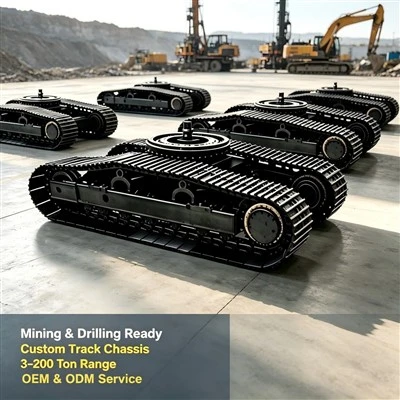
If you’re dealing with undercarriage wear, broken links, seal issues, or any other problem that’s slowing your machine down, we’re here to help. Our team has the expertise to inspect your undercarriage, identify issues early, and supply high-quality, durable components that are built to withstand the toughest job sites. We work with operators, maintenance crews, and fleet managers to not just fix problems, but prevent them from happening in the first place. Don’t let undercarriage issues derail your projects—reach out to us to discuss your needs, whether you’re a small construction business or a large mining operation. We’ll work with you to find solutions that fit your budget and keep your machines running smoothly for years to come.
Track Undercarriage References
- Heavy Equipment Manufacturers Association. (2021). Undercarriage Maintenance Best Practices for Crawler Machines. North American Construction Industry Standards.
- Caterpillar Inc. (2022). Crawler Undercarriage Component Wear Analysis: Mining and Construction Applications. Technical Bulletin, Publication No. SEBD0555.
- Komatsu Ltd. (2020). Guidelines for Track System Operation and Component Replacement. Field Service Manual for Heavy-Duty Crawlers.
- International Organization for Standardization. (2019). ISO 15531:2019, Earth-Moving Machinery – Crawler Undercarriages – Safety and Maintenance Requirements.
Murphy Construction Machinery (Shandong) Co., Ltd.
Murphy Construction Machinery (Shandong) Co., Ltd. is one of the most professional heavy duty crawler undercarriage manufacturers and suppliers in China, also supports customized service with low price. Please feel free to buy CE approved heavy duty crawler undercarriage made in China here from our factory. For pricelist, contact us now.
Address: Room A3, Zone E, Yangqiao Industrial Park, Liuxing Street, High Tech Zone, Jining City, Shandong Province
E-mail: mefgcjx@126.com
WebSite: https://www.mefjx.com/
