If you’ve ever stood in front of a factory line, a water treatment system, or even a small irrigation setup, you’ve probably passed a solenoid valve and never noticed it. These unassuming devices are the workhorses of fluid control, opening and closing at the push of a signal to regulate everything from natural gas in a pipeline to chemicals in a pharmaceutical production batch. But as a solenoid valve supplier, the question I hear most from engineers, plant managers, and even small-scale project owners isn’t just “does this valve work?”—it’s, “how much flow can it actually handle?” That answer doesn’t fit in a single number, though; it’s a balance of physics, design, and the specific needs of your system. Let’s break this down without the jargon, so you can make sense of it for your next project. Solenoid Valve
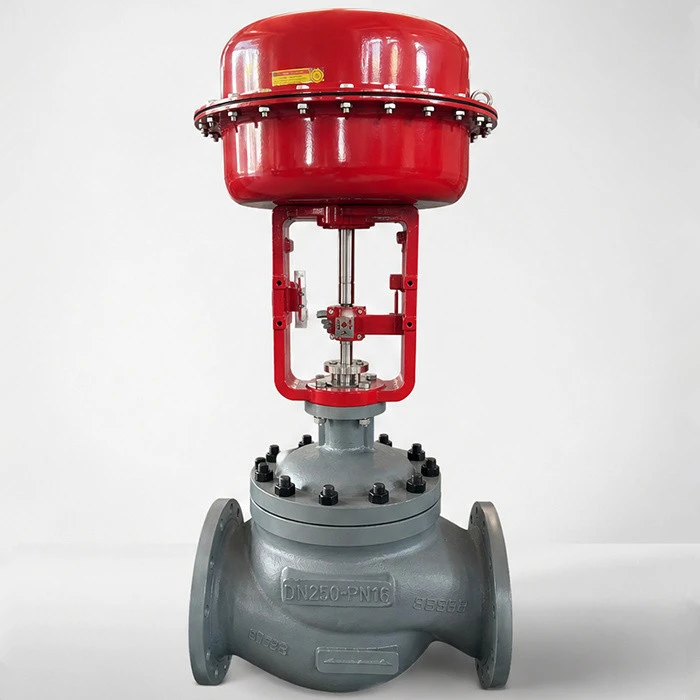
First, let’s start with the basics: what flow capacity even means for a solenoid valve. At its core, flow capacity is how much fluid (liquid or gas) can pass through a fully open valve in a set amount of time, usually measured in gallons per minute (GPM) for liquids or cubic feet per minute (SCFM) for gases at standard conditions. Think of a valve like a garden hose nozzle: a wide-open, fully unscrewed nozzle lets more water through than a half-twisted one, but the length of the hose, the water pressure behind it, and even any kinks in the line change how much flow actually reaches your end. A solenoid valve works the same way, except instead of a finger twisting the nozzle, an electrical current triggers a plunger to lift or drop, opening a path for fluid.
Now, the maximum flow capacity isn’t just a single number stamped on a valve’s datasheet. It’s determined by three big factors: the valve’s size (orifice diameter), the pressure drop across the valve, and the type of fluid you’re moving. Let’s talk about orifice first—this is the opening inside the valve where fluid passes. A ½-inch valve has a smaller orifice than a 2-inch valve, so even at the same pressure, the bigger one will let more flow through. I’ve seen this trip up a lot of first-time buyers: they pick a valve that matches the pipe size of their system (say, a 1-inch pipe) but don’t stop to check if the orifice inside that 1-inch valve is actually full-size. Some manufacturers cut costs by making the orifice smaller than the pipe, which limits flow and can cause pressure drops that mess up your system’s performance. As a supplier, I always advise clients to double-check the orifice rating, not just the nominal valve size.
Next, pressure drop. This is the difference in pressure between the inlet side of the valve (where fluid comes in) and the outlet side (where it goes out). The maximum flow of a solenoid valve is directly tied to this drop. The formula engineers use is called the flow coefficient, or Cv, which is defined as the number of gallons of 60°F water that can pass through a fully open valve with a 1-psi pressure drop. If you have a Cv rating, you can calculate flow for any pressure drop. For example, a valve with a Cv of 10 will flow about 10 GPM at 1 psi drop, or almost 14 GPM at 2 psi—double the pressure drop doesn’t double the flow, but it’s a close relationship. If your system has a 5-psi pressure drop across the valve, that same Cv 10 valve will flow around 22 GPM. A lot of people make the mistake of assuming higher pressure means higher flow, but if the pressure on both sides of the valve is equal (say, inlet and outlet are both at 100 psi), the pressure drop is zero, and no fluid will move at all. That’s why sizing for your actual system’s pressure, not just the line pressure, is so critical.
Fluid type is the third big piece here. Liquids and gases have different flow properties, so a valve’s maximum flow for water isn’t the same as it is for air, natural gas, or oil. Gases, in particular, follow a different set of rules because their volume changes with pressure. For gases, we use SCFM (standard cubic feet per minute) at a specific pressure, usually 100 psi for industrial applications. A valve that flows 50 SCFM of compressed air at 100 psi might only flow 30 SCFM at 50 psi, because lower pressure means the gas expands and takes up more space. Viscosity also matters for liquids: thicker fluids, like hydraulic oil or heavy fuel, move slower than water, so a valve that handles 50 GPM of water might only handle 30 GPM of a 100-centistoke oil. I’ve had a client in the food processing industry come to me once thinking their ¾-inch valve could handle their heavy syrup, only to find out the high viscosity slowed flow down to a trickle. We swapped in a valve with a slightly larger orifice, and it fixed their line speed issue right away.
Now, let’s get into the real-world limits of solenoid valves, because even the best-designed one has a cap on what it can do. Most standard industrial solenoid valves have flow capacities ranging from less than 1 GPM (for tiny ⅛-inch valves used in medical devices or small irrigation emitters) up to around 150 GPM for 2-inch valves handling water at 10 psi. For gases, that translates to anywhere from 1 SCFM (small air valves for pneumatic tools) up to 500 SCFM for large 2-inch valves at 100 psi. Wait, though—you might be thinking, “Why not just get a huge valve if I need more flow?” Because size comes with trade-offs. A larger valve is more expensive, takes up more space, uses more power to activate the plunger, and takes longer to open and close. If you’re regulating a fast cycle system, like a packaging line that opens and closes valves every few seconds, a 2-inch valve might be too slow to keep up with the line’s pace. That’s why maximum flow capacity isn’t about choosing the biggest valve; it’s about choosing the valve that matches your flow needs, pressure, and cycle time.
I also want to talk about something that’s not often included in datasheets: rated flow vs. maximum operating flow. A lot of datasheets will list a maximum flow, but that’s usually the absolute top end you can get under perfect test conditions (clean fluid, consistent pressure, no line bends). In the real world, things change. Dirt in the line, wear on the valve’s plunger, or kinks in the pipe can reduce flow. That’s why as a supplier, I always recommend adding a 10-15% safety margin when calculating required flow. If your system needs 100 GPM, don’t size for exactly 100—go for a valve that can handle 115 or 120 GPM. It might cost a little more upfront, but it will reduce the chance of downtime, which is way more expensive for any operation.
Let me share a quick example from a recent client to put this in perspective. A municipal water treatment plant reached out to me last month, needing a valve to regulate flow to a small filtration unit. They told me they needed 80 GPM of water at 15 psi pressure drop. I pulled up our standard 1.5-inch water solenoid valve, which has a Cv rating of 95. Let’s do the math: flow = Cv * sqrt(pressure drop / specific gravity of water, which is 1). So 95 * sqrt(15) = 95 * ~3.87 = 368 GPM. Wait, that’s way more than they needed, right? Why didn’t we go with a smaller valve? It turned out their filtration unit had a few bends in the pipe that created a 2-psi extra pressure drop, and they wanted to leave room for future expansion of the unit. The 1.5-inch valve was still smaller than a 2-inch, cheaper, and had a fast response time perfect for their control system. If I’d just sized for their initial 80 GPM, they would have ended up with a valve that worked, but was too tight to handle any changes down the line.
Another common question: can a solenoid valve be modified to handle more flow? The short answer is no, not really. The orifice size is fixed during manufacturing, and the plunger design is matched to that orifice to create enough force to open against system pressure. If you drill a bigger hole in the orifice, the plunger won’t have enough power to open it, and you’ll get leaks or the valve won’t activate at all. Modifying a valve like that is a quick way to ruin it. If you need more flow, your only real option is to step up to a larger valve size, or even use multiple smaller valves in parallel to split the flow. I’ve worked with a few auto parts manufacturers that use four small ½-inch valves instead of one large 2-inch valve because their cycle time is too fast for a big valve to keep up.
Now, let’s touch on the edge cases that people often overlook. For low-flow applications, like controlling a drip irrigation line or a small lab device, the maximum flow can be as low as 0.1 GPM, which is still a perfectly usable flow for those needs. For high-flow applications, like large industrial pipelines, we can offer custom solenoid valves with orifices up to 4 inches, capable of handling over 500 GPM of water or 1,200 SCFM of gas. But even those have limits: at a certain flow rate, the fluid’s velocity becomes so high that it can cause water hammer, that loud, damaging bang when a valve closes suddenly. That’s another reason sizing to your actual flow is key—too much flow, even if the valve can physically handle it, can damage your pipes or other equipment.
So, what should you take away from all this? First, don’t just look for a “maximum flow” number on a datasheet—dig into the Cv rating, the pressure drop of your system, and the type of fluid you’re moving. Second, add that safety margin to avoid unexpected drops in flow due to real-world conditions. Third, remember that bigger isn’t always better; a valve that’s too large will waste money and cycle slower than you need. As a solenoid valve supplier, my job isn’t just to sell you the biggest valve on the shelf—it’s to help you find the right one that balances capacity, cost, and performance for your specific project.
If you’re working on a project right now and need help figuring out the right flow capacity for your solenoid valve, or if you have questions about sizing, pressure ratings, or fluid compatibility, don’t hesitate to reach out. We can walk through your system details, share datasheets, and help you pick a valve that works for your needs without overspending.
Globe Valve References
- Control Valve Handbook, International Society of Automation, 2021
- Fluid Control Engineering: Principles and Applications, Elsevier, 2019
- NIST Handbook of Mathematical Functions, U.S. Department of Commerce, 2018
- Solenoid Valve Design and Application Guide, Fluid Power Society, 2020
Shandong Yuhong Valve Co., Ltd.
Shandong Yuhong Valve Co., Ltd. is one of the most professional solenoid valve manufacturers and suppliers in China. With abundant experience, we warmly welcome you to wholesale high quality solenoid valve at competitive price from our factory. Good service and punctual delivery are available.
Address: Intersection of Chuangye Avenue and Huanghe Road, Zhangdian District, Zibo City, Shandong Province
E-mail: info@yuhong-valve.com
WebSite: https://www.yh-controlvalve.com/
