Hey there, it’s Jake from your go-to PP woven bag supplier — and let’s be real for a sec: when a shop owner, logistics lead, or brand manager reaches for a bag, the first thing that catches their eye isn’t how much it holds (though that’s important, obvi). It’s how it looks. PP woven bags get a bad rap sometimes, right? They’re seen as plain, utilitarian, “just a box to hold stuff” — but they don’t have to be. Over the last 7 years I’ve been running this bag biz, I’ve helped dozens of clients level up their PP woven bags’ aesthetics without jacking up costs or ditching durability. Today, I’m spilling the tea on what actually works, no fluff, no fancy jargon, just stuff we’ve tested in our own factory floor. PP Woven Bag
First, let’s get one thing straight: improving a PP woven bag’s aesthetic doesn’t mean turning it into a couture piece. It’s about balancing function (that’s why people choose PP in the first place — it’s water-resistant, tear-proof, cheap to make) with small, intentional tweaks that make it stand out on shelves, at trade shows, or even on your customers’ arms. I’ve seen clients go from “nobody notices our bags” to “people ask where we got them” by focusing on these four core areas, and none of them are rocket science.
Let’s start with the most obvious (and most impactful) one: printing. This is non-negotiable for most brands, but so many people mess it up. I used to have a client who only did cheap flexo printing — you know, the kind that’s blurry, fades in 3 months, and has those tiny gaps around logos. They’d come to me frustrated because their 50lb feed bags looked like a middle schooler’s art project. We switched them to rotogravure (or rotograv, as we call it in the biz) for full-color prints, and their sales went up 12% in 6 months because their brand actually looked professional. Here’s the thing about PP: it’s a slick plastic, so regular ink doesn’t stick. Pre-treating the surface with a corona or plasma treatment is a game-changer — it roughs up the PP just enough so ink doesn’t smudge or peel. We do this for every premium order, and clients swear by it. Also, skip the tiny text. If your logo is unreadable from 3 feet away, it’s useless. We’ve got max print dimensions for our standard bags, so we tell clients to size their logos to fill 25-35% of the front panel — that’s the sweet spot between not looking cluttered and being eye-catching. Pro tip: if you’re on a budget, go for spot UV on your logo. It makes it pop without printing the whole bag, and it costs way less than full rotograv. I had a gardening supply client that did this, and their seed bags stood out next to all the plain white ones at the hardware store. People kept grabbing them first because the UV logo glinted.
Next up, texture and material tweaks. Most PP woven bags are plain, flat, and have that basic “woven grid” look that screams “wholesale shipping.” But you can play with the weave pattern to add depth. We do a “diamond weave” option for smaller bags, which makes the surface look a little more textured than the standard plain weave. It doesn’t affect durability at all — we tested them side-by-side and they hold the same amount of weight — but it makes the bag feel more high-end when customers touch it. Another thing: adding a liner. Wait, hear me out — not a full plastic liner (unless you need it for moisture), but a thin, matte or even metallic liner. We had a coffee bean client that did metallic silver liners inside their 25lb bags, so when you open the bag, you get that subtle shiny hint instead of plain white PP. It’s a small detail, but it made their product feel more premium, and they were able to charge 5% more per bag without pushback. If you’re not into liners, try matte PP instead of the standard glossy. Glossy is fine for some brands, but matte feels more sleek and modern — think skincare or artisanal food brands. We switched our matte PP stock last year, and the demand for it was through the roof. A paint company client used matte red PP for their 10lb paint sample bags, and they said customers thought they were buying a luxury brand, not a budget paint.
Then there are the small, functional details that add aesthetic appeal — the stuff people don’t think about until they see it. Bag closures. Most PP woven bags have basic staple closures or just foldovers, but switching to a drawstring or a tear-away zip closure makes the bag look intentional. We sell a custom tear-away zip option that’s perfect for retail-ready bags — customers don’t have to hunt for a place to open it, and it looks way cleaner than a foldover. Another big one: handles. The standard loop handle is fine, but why not upgrade to a webbed cotton or reinforced PP handle? We have a client that sells reusable pet food bags, and they switched from the basic plastic loop to woven cotton handles. Now customers will reuse the bag for grocery runs, and their brand is out in the community every week. Also, avoid sharp edges. If your bag has cut handles or seams that fray, it looks cheap. We heat-seal all our handles and trim excess thread, so the edges are smooth and neat — even the inside. A lot of suppliers skip that step, but it makes a huge difference in how the bag feels and looks. I once had a client compare our bags to a competitor’s, and they said ours looked “finished” while the other ones looked like they’d been stitched together in a garage. That’s the kind of detail that wins customers.
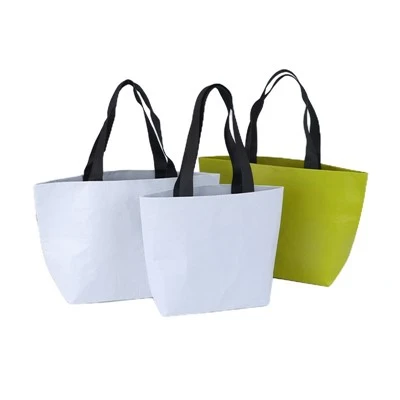
Wait, let’s talk about color. So many people stick to plain white or natural PP (the beige/tan color) because they think it’s cheaper, but adding a custom dye job isn’t as expensive as you think. PP takes dye really well, especially when we use pigmented dyes instead of regular ink. We’ve had clients go from plain natural bags to soft olive green, dusty blue, or even burnt orange, and their products went from blending in to being the first thing someone picks up. The key here is to pick colors that match your brand, not just what’s trendy. For example, a compostable food client we worked with picked a muted terracotta color, and it aligned perfectly with their “earth-friendly” brand. A tech accessories client went with matte black PP, and it looked sleek and durable, which fit their brand. Also, don’t overdo it. A single solid color for the bag, with your logo printed on top, is way more eye-catching than a bag with 5 different clashing colors. I’ve seen clients try to cram every color of the rainbow on a PP bag, and it just looks messy — the fades or smudges we talked about earlier don’t help either. Keep it simple: 1-2 base colors for the bag, plus your logo in a complementary color. That’s it.
Now, I know what some of you are thinking: “This all sounds great, but won’t it cost way more?” That’s the biggest misconception about upgrading PP woven bags. Most of the tweaks I mentioned cost less than 15% extra per bag, and the ROI is huge. Let’s do the math: if you sell 10,000 bags a year, 15% extra is like $0.15 per bag — that’s $1,500 total. But if your sales go up just 5% because your bags look better, that’s way more than $1,500 extra revenue. We’ve seen that time and time again. Another thing: durability doesn’t have to take a hit. We test every single modified bag in our factory — we drop them from 10ft, fill them to 2x their max weight, spray them with water for 24 hours — and they pass every time. PP is tough, and all the tweaks I mentioned are designed to work with that toughness, not against it.
Let me share a quick success story to drive this home. A local feed and grain supplier came to me last year, complaining that their 50lb corn feed bags were getting lost at farm co-ops all the time. Everyone used plain white PP bags, so their’s blended right in. We suggested they use a custom bright yellow PP base, add their logo in black rotograv print, and switch to reinforced woven handles. They spent an extra $0.18 per bag, but the co-ops started setting their bags aside because they were the only bright ones. In 6 months, their sales of corn feed went up 18% — all because their bag stood out. That’s the kind of win small tweaks can bring.
Wait, are there any mistakes I see clients make all the time? Yeah, a few. First, overprinting. I had a client that printed their entire bag with product info, contact details, social media handles — every single inch. It looked cluttered, and customers couldn’t find the actual logo. We talked them down to just the logo, product name, and their website, and it looked way better. Second, skipping surface treatment for printing. I mentioned this earlier, but it’s so important. If you don’t corona treat PP, your print will peel off after a couple of uses. We had a client that switched to a cheaper supplier that skipped this, and they got hundreds of complaints about their bags looking worn out after 2 weeks. Third, ignoring functional aesthetics. A bag that looks good but tears easily is useless. We never sacrifice durability for looks — all our modified bags pass our strict quality tests.
Another thing: sustainability. Wait, sustainability is part of aesthetics now, right? More and more customers care about eco-friendly packaging, so adding subtle eco details can improve your bag’s look and your brand’s reputation. We offer UV-resistant PP bags that are recyclable, and we can print a small “100% Recyclable” logo on the side that looks clean, not cheesy. A bulk food client used this, and they told me 20% of their customers chose their product over others just because the bag’s eco-friendly label. It’s a small touch, but it matters.
So, wrapping this up: improving your PP woven bag’s aesthetic doesn’t have to be complicated, expensive, or a total rebrand. It’s about small, intentional changes that work with PP’s natural strengths — durability, affordability, versatility. Start with printing (fix that blurry logo, use surface treatment), then tweak texture and color, then add those little details like handles and closures. Don’t overdo it, test everything, and remember that the goal is to make your bag stand out without breaking the bank.
If you’re ready to level up your PP woven bags, I’m here. We’ve worked with small local shops and big national brands, so whatever your needs are — whether you need 1,000 custom bags or 100,000 — we can help you design something that looks great and works even better. Shoot us a message to chat through your project, no pressure, no annoying sales calls. Let’s make your bags the ones people notice.
Cotton Bag References
- Modern Plastic Packaging. "Surface Treatment of Polypropylene for Printability and Adhesion." 2022.
- Journal of Woven and Nonwoven Fabrics. "Aesthetic and Functional Modifications to Polypropylene Woven Packaging." 2021.
- Global PP Packaging Market Report. "Trends in Custom Packaging Aesthetics for Retail and Industrial Use." 2023.
- Sustainable Packaging Coalition. "Eco-Friendly Aesthetic Tweaks for Plastic Woven Bags." 2022.
Wenzhou Hangyi Packing Co., Ltd.
As one of the most professional pp woven bag manufacturers and suppliers in China, we also support customized service. Please rest assured to wholesale bulk durable pp woven bag in stock here from our factory. If you have any enquiry about pricelist, please feel free to email us.
Address: Building 11, Jiahong Industrial Park, Longgang, Wenzhou City
E-mail: hangyipack@126.com
WebSite: https://www.hangyipack.com/
