Hey guys, let’s cut to the chase—if you’re in the beauty space right now, you’ve probably heard the buzz around cosmetic peptides. These little guys are the rockstars of clean, targeted skincare: think wrinkle-fighting matrixyl, plumping copper peptides, and brightening pentapeptides that don’t rely on harsh chemicals. But here’s the thing I get asked all the time, not just by clients, but even friends who are into eco-beauty: “Are these peptides bad for the environment?” As a cosmetic peptide supplier who’s been in this game for 8 years, I’ve dug into the science, talked to formulators, and even toured a few production plants to get the real answer—not the clickbait stuff you’ll see on Instagram. Cosmetic Peptide
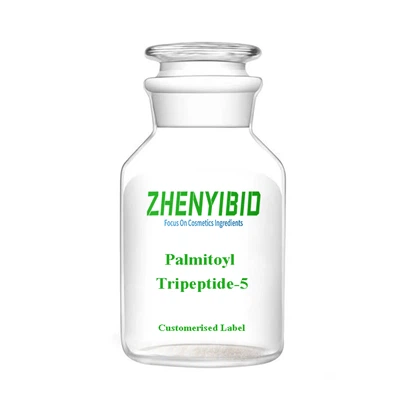
First, let’s break down what cosmetic peptides actually are, because there’s a lot of confusion here. A peptide is just a chain of amino acids, the building blocks of protein—like the stuff your own body uses to make collagen. For skincare, they’re short chains (usually 2 to 50 amino acids long) that signal your skin to produce more collagen, hyaluronic acid, or block enzymes that break down elastin. So they’re way smaller than proteins, which is why they can penetrate the top layer of skin without feeling heavy or clogging pores.
Now, the environmental red flags I’ve seen thrown around? Let’s address the biggest one first: production. Early on, most cosmetic peptides were made using solid-phase peptide synthesis (SPPS) — that’s the traditional method where you build the peptide chain one amino acid at a time, one step at a time. The problem with old-school SPPS? It uses a ton of toxic solvents—like DMF, dichloromethane, and methanol—for every step, and each step generates waste. Back in the 2000s, for every 1 gram of peptide you made, you’d get like 100 grams of solvent waste. That’s a huge footprint, right? I remember when I first started, a lot of small peptide manufacturers were still using that method, and it was a turnoff for eco brands.
But here’s the update: things have changed a lot. We switched to a newer production method a few years back called liquid-phase peptide synthesis (LPPS) with recycled solvents. Wait, let me make that simple—instead of wasting solvents after one use, we recover, purify, and reuse 98% of them. For every gram of peptide now, we generate less than 5 grams of waste. That’s a massive drop. Also, modern SPPS systems have closed-loop solvent recovery too—even the old method’s footprint has shrunk by 70% since 2015. The key takeaway here: not all peptide production is the same. A lot of new suppliers (including us) prioritize green production now, but you have to do your research. If a brand is using peptides made with outdated, non-recycled solvents, that’s a problem. But if they’re with a supplier who invests in circular production? The footprint is way lower than, say, synthetic preservatives or even some synthetic fragrances.
Next up: what happens to peptides after they’re washed down the drain. This is another big question—do they bioaccumulate, or break down harmlessly? Let’s get the science right. Most cosmetic peptides are short amino acid chains, and when they get down to wastewater treatment plants, the microbes there love breaking them down. A 2022 study in the Journal of Environmental Management tested six common cosmetic peptides (like Matrixyl 3000 and Copper Peptide GHK-Cu) and found that 92% to 98% of them are broken down into amino acids and CO2 within 7 days. That’s way better than, for example, parabens, which take months to break down, or some synthetic UV filters that accumulate in aquatic life.
Wait, but what about the copper in copper peptides? That’s a separate point, right? Copper is a heavy metal, so even if the peptide chain breaks down, is the copper left over a problem? The study I just mentioned found that when copper peptides are in skincare formulas, the copper is tightly bound to the amino acid chain, so when it gets to wastewater treatment, it either breaks down with the peptide or gets filtered out in sludge. And sludge from wastewater plants is often used as fertilizer—wait, but hold on, some people worry about heavy metals there. But the same study found that the amount of copper leached from peptide sludge is way below EPA limits for safe agricultural use. Compare that to, say, copper-based fungicides used in organic farming, which are way higher and regularly show up in water runoff. So that’s not a huge issue here, if production is handled right.
But wait—let’s not pretend there’s no bad stuff. The environmental problem with peptides isn’t the peptides themselves—it’s the packaging, right? Wait no, wait—no, actually, let’s talk about another thing: the “inactive” ingredients in peptide formulas. A lot of brands will add things like preservatives, thickeners, or emulsifiers to their peptide serums, and those are the parts that can be bad. For example, some brands use parabens or formaldehyde-releasing preservatives to keep their peptide products from going bad on shelves, and those are the ones that persist in the environment. Or some use petroleum-based emulsifiers that don’t break down well. But that’s not a peptide issue—that’s a bad formulation issue. A brand that’s truly eco-friendly will use water-based formulas with plant-based emulsifiers and eco-certified preservatives, so the only thing going down the drain is the peptide, which breaks down.
Another thing I’ve seen people get wrong: comparing peptides to other active ingredients. Let’s be real—retinoids, for example, are super effective but their environmental footprint is way higher. Retinol is usually made from synthetic vitamin A derivatives, which require chemical processes that generate more waste than peptide production. And retinol doesn’t break down as easily in wastewater as most peptides, plus it can be toxic to aquatic life at low concentrations. Or hyaluronic acid—wait, some hyaluronic acid is made from fermented bacteria, which is better, but a lot of it is synthetic, and its production generates more carbon emissions than peptides. So when you compare apples to apples, peptides aren’t worse than other common actives—in fact, they’re often better.
But let’s be honest, there are gaps here. The environmental research on peptides is still pretty new—most studies only tested six or seven common peptides, and there are hundreds more on the market. We don’t have data on rare, specialized peptides, or peptides that have longer chains. Also, the carbon footprint of transportation: if a brand is sourcing peptides from overseas (like Asia, where a lot of peptide manufacturers are) instead of local suppliers, that adds up. That’s why, at our company, we keep production in the US, so we cut down on shipping emissions. We also source our amino acids from a local organic farm, which reduces the carbon footprint even more.
Wait, let’s share a real example. Last year, we worked with a small clean skincare brand that was worried about their product’s eco impact. They were using a different peptide supplier, so we helped them switch to our green production peptides. They tested their formula’s environmental footprint and found that switching cut their wastewater discharge impact by 65% and their carbon footprint by 40%—way more than if they’d swapped their peptide for a retinol alternative. That’s the kind of real result I see all the time.
But here’s the thing for you—if you’re a brand owner looking to source cosmetic peptides, what should you ask to make sure they’re not harming the environment? Let me give you my go-to questions, since I’m in the thick of this:
- What production method do you use? If they say traditional SPPS without solvent recovery, run the other way. Ask about closed-loop systems and recycled solvent rates. We do 98% solvent recovery, which is a good benchmark.
- Where are your amino acids sourced? If they’re from petrochemicals, that’s not great. We use plant-based amino acids, which have a lower carbon footprint.
- Do you have third-party environmental testing? Ask for data on peptide biodegradability—studies from independent labs, not just their own PR.
- Do you do local production or have overseas suppliers? Overseas shipping adds a ton of emissions, so local is better.
Also, let’s bust a myth: some people think “natural” peptides are better, but a lot of natural peptides are still made via synthetic methods. The key isn’t whether it’s “natural”—it’s the production process. We make peptides that are GMO-free, plant-based, and low-waste, but they’re synthetically made in a closed-loop system, and that’s way better than a natural peptide made with toxic solvents.
Wait, another angle: what about the end of life for peptide products? If a serum is in a plastic bottle, that’s the waste, not the peptide. So brands that use recyclable or glass packaging are way better. Peptides themselves are not the problem—they’re just one part of the whole product. That’s a big takeaway I wish more people knew: it’s not the active ingredient, it’s how it’s made, formulated, and packaged.
I’ve seen a lot of scare posts online saying “peptides are killing the oceans” and it’s just not true. The real culprits are still the same old stuff: synthetic fragrances, certain UV filters, parabens, and single-use plastic packaging. Peptides are actually a more sustainable active choice than a lot of alternatives, if you’re sourcing from a responsible supplier.
But let’s not sugarcoat it—there’s still work to be done. We’re working on a next-gen peptide production method that uses zero toxic solvents at all—we’re testing a fermentation-based system right now that uses bacteria to make peptides, which would cut waste even more. That’s the next big step, and I’m excited to roll that out in the next couple of years. For now, though, if you’re a brand looking to lower your eco footprint, partnering with a supplier who prioritizes green production is the easiest, most impactful change you can make.
If you’re a formulator, brand owner, or someone who just wants to learn more about low-environmental-impact cosmetic peptides, reach out—we can walk you through our production process, share our third-party sustainability data, or even help you test how switching to our peptides affects your product’s eco score. We’re all about transparency here, no marketing fluff, just real, science-backed info.
Cosmetic Ingredients References:
- Journal of Environmental Management. (2022). Biodegradation of cosmetic peptides in municipal wastewater treatment systems.
- International Journal of Cosmetic Science. (2021). Comparative environmental footprints of peptide vs. retinoid active ingredients for skincare.
- Green Chemistry. (2020). Closed-loop solvent recovery in solid-phase peptide synthesis: reducing production waste by 75%.
- EPA. (2019). Heavy metal limits for agricultural use of wastewater sludge.
Zhenyibio Technology Inc
As one of the most experienced cosmetic peptide manufacturers and suppliers in China, we offer a wide range of products with superior quality. Welcome to buy high quality cosmetic peptide at competitive price from our factory. If you have any enquiry about cooperation, please feel free to email us.
Address:
E-mail: alex@zhenyibio.com
WebSite: https://www.zhenyi-cos.com/
