If you’ve ever reached for a roll of masking tape to hang a poster, mask off trim during a paint job, or bundle a loose cord, you might’ve wondered: how thick is that stuff, anyway? As someone who’s spent the last 12 years running a small masking tape supply business—talking to contractors, DIYers, and auto body shops every week—I can tell you it’s not a random number. Thickness is make-or-break for how well masking tape works, and it’s not just a measurement to print on a box. It’s the difference between a clean paint line and bleeding, a tape that pulls paint off drywall and one that stays put, or a roll that unrolls smoothly and one that tangles mid-project. Let’s break this down, no jargon, just the stuff I’ve learned on the shop floor and behind the scenes with the materials we use. Masking Tape
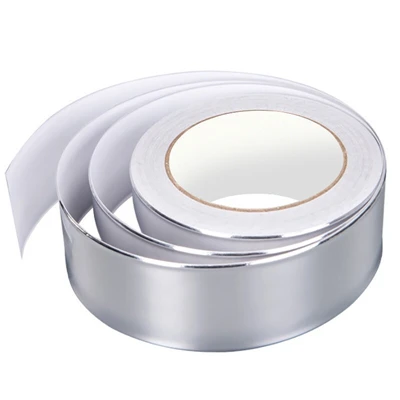
First, let’s start with the basics: when we talk about tape thickness, we’re almost always talking about “mil,” not inches or millimeters, around here. A mil is a thousandth of an inch, so 1 mil equals 0.001 inches. It’s a tiny unit, but every mil matters. For context, a human hair is about 2 to 3 mil thick, a sheet of standard copy paper is roughly 3 mil, and a credit card is 30 mil. That gives you a sense of scale.
Now, masking tape isn’t a single thing—its thickness depends entirely on what it’s made for. Let’s start with the most common types we supply, and their typical thicknesses. The light-duty stuff, the kind you grab for a quick poster or a kid’s craft project? That usually clocks in at 2 to 5 mil. It’s thin, flexible, and easy to tear by hand, which is perfect for small jobs. But I’ll be honest: I won’t sell this to a professional contractor. It’s too flimsy to hold up to paint, and it’ll bleed under the edges if you’re working with latex or oil-based paints. Then there’s the medium-duty masking tape, the workhorse for most home improvement projects—painting interior walls, taping off baseboards, sealing boxes for a move. That’s usually 5 to 8 mil. This is the sweet spot for most people: thick enough to stay rigid when you press it to trim, but thin enough that it doesn’t leave a stubborn residue when you peel it off. It’s the tape we sell the most, and I get why—balances durability and ease of removal.
For heavy-duty jobs, though, you need something thicker. Think auto body work, exterior house painting, or industrial masking for powder coating. That’s 8 to 14 mil. This tape is stiffer, more resistant to stretching, and can handle higher temperatures too—super important when you’re painting a car’s frame and the oven-cured paint needs to set at 180°F. A 12-mil tape won’t wrinkle when you’re pressing it around curved fenders, and it won’t lift when paint is sprayed under pressure. The thickest masking tape we carry is 15 to 20 mil, mostly for special industrial uses like masking large metal parts or sealing in dust during construction. This stuff is almost like a thin plastic strip, but with the adhesive that lets you peel it off without damaging surfaces—though it’s not for every job, since it’s a bit too stiff for tight corners.
But here’s the thing: thickness alone doesn’t tell you how good a tape is. The key is what that thickness is made from. Every masking tape has two main layers: the backing (usually paper, sometimes a synthetic film) and the adhesive that sticks it to your surface. The backing is what adds most of the thickness. For light-duty tape, the backing is a thin crepe paper, treated to be tearable. For medium and heavy-duty, it’s a thicker crepe paper, sometimes with a coating to resist moisture or heat. The adhesive is a thin layer—usually 1 to 2 mil, depending on how strong it needs to be. A tape with a thick backing but a weak adhesive will still pull off paint, no matter how thick it is. And a thin backing with a strong adhesive will stick too well, leaving residue.
Over the years, I’ve seen mistakes people make with tape thickness all the time. A homeowner will grab the thickest tape they can find for a tiny bedroom paint job, because they think it’ll be “better,” only to end up with a ragged edge around a light switch, or the tape won’t stick to the textured drywall because it’s too rigid. On the flip side, a contractor might use a 4-mil light-duty tape on an exterior deck, and the rain and wind will peel it off before they finish painting. That’s why we always ask customers about their specific job before we recommend a thickness. Last month, a new painter came to us panicking because he’d been using 6-mil tape for his house siding, and it was lifting after a week. We pointed him toward our 10-mil exterior-grade tape, which has a thicker backing and a UV-resistant adhesive, and he texted me three days later saying the lines were sharp and the tape peeled off clean.
There’s also a common misconception that thicker tape is always more expensive. Not exactly. The material cost goes up with thickness, but so does performance—so for a one-off poster, you’re paying for durability you don’t need, and that can add a few extra dollars for a roll you’ll never use again. Our 5-mil light-duty roll is $2.99, while our 10-mil medium-duty exterior roll is $5.99, which is a difference, but for someone doing a whole house, it’s worth the cost to avoid redoing a paint job because of bleed or residue.
Testing thickness is part of what makes a good masking tape supplier, too. We don’t just pull numbers from a catalog—we test every batch we get. Last year, a new supplier sent us a shipment of 8-mil tape that turned out to be only 6.5 mil once we measured it. That might not sound like a big difference, but on a curved surface, that extra 1.5 mil makes the tape far more likely to wrinkle and let paint seep in. We sent that batch back, and now we test every roll we receive with a digital micrometer—something we spent a couple hundred dollars on, but it’s saved us from a lot of headaches with customers.
Another thing that affects perceived thickness is the adhesive. Some adhesives are thicker than others, so a tape with a 7-mil backing and a 2-mil adhesive might feel thicker than a tape with a 10-mil backing and a 1-mil adhesive, even if the total thickness is the same. That’s why we also test peel strength—how well the adhesive sticks, and how easily it comes off. A 9-mil tape with a weak adhesive will feel flimsy, while a 7-mil tape with a strong, rubber-based adhesive will feel sturdy. It’s a balance, and it’s why we never just list thickness on our product pages—we add notes about what surfaces it works on, temperature ranges, and recommended uses.
I’ve also had customers ask about millimeters, since that’s the metric standard. To convert mil to millimeters, just multiply by 0.0254. So a 5-mil light-duty tape is about 0.127 mm, a 10-mil medium-duty is 0.254 mm, and a 15-mil heavy-duty is 0.381 mm. It’s not a huge difference, but for anyone used to metric measurements, that’s a handy conversion.
At the end of the day, the right thickness of masking tape depends on what you’re doing. If it’s a quick craft, 2-5 mil works. Interior painting, 5-8 mil. Exterior or auto work, 8-14 mil. Special industrial jobs, 15-20 mil. But the most important thing is that the tape’s thickness matches the job, not just that it’s the thickest or thinnest available.
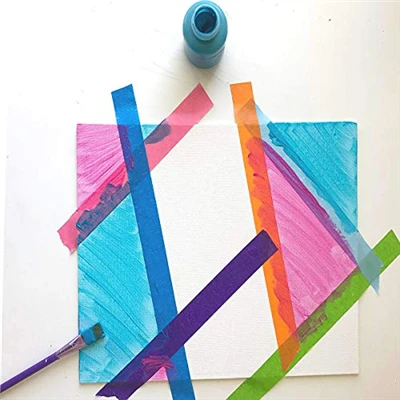
I’ve been in this business long enough that I’ve seen people waste hundreds of dollars on the wrong tape—either buying too little thickness and having to redo work, or buying too much and overspending. That’s why I’m always happy to talk through a project with someone, no matter how big or small. If you’re gearing up for a paint job, a car restoration, or any project that needs clean, reliable masking, we can walk through what thickness will work best for you, answer any questions you have about tape materials, and make sure you get the right roll for the job. Don’t guess—reach out, and let’s make sure your next project goes smoothly.
Nano Tape References
ASTM D3359-17, Standard Test Methods for Measuring Adhesion by Tape Test
"Masking Tape: Types, Properties, and Applications", Adhesive & Sealant Industry Magazine, 2022
Crepe Paper Backing Masking Tape Specifications, International Organization for Standardization (ISO) 1461:2019
Yiwu Yubang Adhesive Products Co., Ltd.
As one of the most professional masking tape manufacturers and suppliers in China, we also support custom service. We warmly welcome you to wholesale high quality masking tape made in China here from our factory. If you have any enquiry about cooperation, please feel free to email us.
Address: 4th Floor, No. 17 Gantang West Road, Yiting Town, Yiwu City, Jinhua City
E-mail: salesmanager@yubangtape.com
WebSite: https://www.yubang-tape.com/
