As a Block Cutting Machine supplier, I get this question every single week—sometimes every few days, from quarried stone operators, concrete block manufacturers, and small fabrication shops alike. They want a hard number, like “replace blades every 3 months” or “swap them after 1,000 cuts.” The truth is, there is no universal answer, and that’s not a cop-out. After 12 years of working with customers across 17 countries, installing machines, troubleshooting, and training operators, I’ve seen a blade last 2 weeks for one team and 18 months for another. Today, I’m breaking down what actually determines replacement frequency, how to extend blade life, and when you’ll know it’s time to swap yours—no vague formulas, just real-world, field-proven insights. Block Cutting Machine
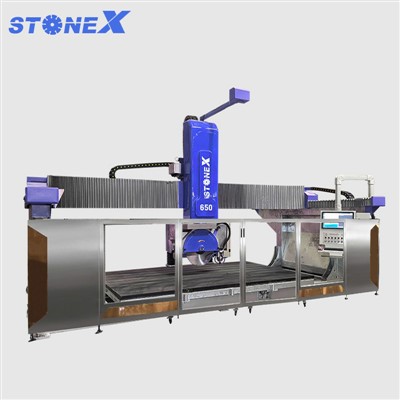
First, let’s start with the basics: what a block cutting machine blade does and why it wears out. Most of our machines use either diamond-tipped saw blades (for natural stone: granite, marble, limestone, sandstone) or carbide-tipped blades (for concrete, concrete masonry units (CMUs), lightweight aggregate blocks, and precast stone). The job is abrasive by nature. When you run a blade through hard material, tiny micro-chips of diamond or carbide wear away with every cut, and the bond holding those grit particles in place gradually erodes. If the bond wears too fast, you waste expensive diamond grit before it’s used, which is costly. If it wears too slow, the grit becomes dull, and you end up wasting material because the cut is uneven, plus you strain your machine.
So, what’s the single biggest factor that dictates replacement frequency? The material you’re cutting. That’s non-negotiable. Let’s break this down by material type, using actual data from our customer base to make it concrete. For concrete block, which is the most common feedstock for small to mid-sized manufacturers, the replacement timeline is pretty consistent, but still varies. Standard 3,000 PSI CMUs, made with normal Portland cement and lightweight aggregate, see blade life ranging from 800 to 1,500 linear feet of cut. If you’re running high-strength 8,000 PSI concrete blocks, which have larger, coarser aggregate and extra cementitious binder, that drops to 400 to 700 linear feet. Then there’s high-performance concrete, like that used for load-bearing wall blocks or retaining wall units—we had one customer in Texas cutting that, and their carbide blades needed replacement every 250 to 400 linear feet.
Natural stone is way more variable, because no two stone quarries produce identical material. Limestone, which is relatively soft and uniform, will have diamond blades lasting 1,200 to 2,500 linear feet. Marble, which is slightly denser, runs 1,000 to 1,800 linear feet. Granite is the big outlier. Depending on the granite’s mineral composition (quartz content, feldspar grain size) and quarry depth, diamond blade life can swing wildly. We have a customer in Vermont cutting bar granite, which is medium-density, and they get 1,200 to 1,600 linear feet per blade. Another customer in Brazil cutting high-density granite used for kitchen countertops, and they’re swapping blades every 450 to 700 linear feet. That’s a massive gap, all from the same basic stone type.
Next up: machine usage and operator practices. This is where the “human factor” makes a bigger difference than most people realize. Let’s talk about run time first. A small block shop running two 8-hour shifts, 6 days a week, will put way more hours on a blade than a shop that only runs one 8-hour shift 4 days a week. But it’s not just total hours—it’s how you use the machine. For example: do you feed the material too fast? If you push a block through the blade at a speed faster than the blade’s rating, you force the grit to do more work at once, causing micro-chipping of diamond or carbide, which speeds up wear. We’ve had customers try to boost production by 20% just by increasing feed speed, only to see blade life drop by 40% within a month—they ended up losing more money on blades than they gained on extra production.
Another common operator mistake: not using enough coolant, or using the wrong coolant. Coolant does two critical jobs: it lubricates the blade and reduces friction between the blade and the material, and it flushes away the fine cut debris that can clog the blade’s gaps. If you run dry or with only a trickle of water, the blade overheats, the bond holding the grit breaks down too fast, and you get excessive wear. We recently had a customer in Ohio that was skipping coolant to save on monthly water bills, and their diamond blades were wearing out in 2 weeks, compared to their usual 6 weeks. When they adjusted their coolant system to run at the manufacturer’s recommended flow rate, blade life went back up without any extra cost—they were just wasting money on unnecessary replacements.
Also, how you handle the blade when it’s installed matters. If you’re not balancing the blade properly, it wobbles during cuts, leading to uneven pressure on the grit, which causes uneven wear and forces you to replace the blade early because it can no longer make a straight cut. A lot of small shops skip blade balancing to save time, and that’s a false economy.
Then there’s blade quality. I know, as a supplier, I’m biased, but this is a fact. Not all diamond or carbide blades are made equal. Cheap blades with low-quality diamond grit will wear out faster, even if they’re rated for the same linear feet as a premium blade. Let’s use an example: two carbide blades for concrete blocks. A budget blade from a non-specialized manufacturer might cost $80, last 500 linear feet. A premium, custom-formulated blade for block cutting might cost $120, last 1,000 linear feet. Over 1,000 linear feet, the budget blade costs $160 (80 per 500), while the premium costs $120. So you’re actually saving money with a higher-quality blade, plus you avoid downtime from swapping blades more often. We see this mistake all the time—owners cut upfront costs on blades, only to deal with higher operating costs and slower production.
Now, the million-dollar question: when do you actually know it’s time to replace the blade, even before you hit the linear foot mark? You don’t have to wait until the blade stops working. Watch for these signs, which are our go-to indicators for our own customers:
First, cut quality drops. If your blocks have chipped edges, uneven cuts, or you’re getting more rejects than usual, that’s a clear sign. A good blade will make a clean, straight cut with minimal edge damage. When the grit wears down, the blade starts to “grab” the material unevenly, leading to rough cuts that can’t be used for finished products.
Second, increased machine strain or noise. If your block cutting machine is making a louder, higher-pitched noise during cuts, or you notice a spike in energy usage (most modern machines track this), that means the blade is dull and working harder than it should. Running a dull blade not only wastes energy, it can also damage your machine’s motor or gears over time, leading to expensive repairs.
Third, increased coolant temperature. If your coolant is running 10 to 15 degrees hotter than normal during cuts, that means the blade is creating more friction because it’s worn, and it’s not dissipating heat properly. This is a secondary sign that blade life is coming to an end.
Fourth, visible wear on the blade itself. If you can see that the blade’s cutting edge has become flat, or there are gaps where the grit is missing, that’s a clear visual cue. A good rule of thumb: if you can’t feel the sharp grit on the blade’s edge with a gloved finger (we recommend doing this when the blade is completely shut off and cool), it’s time to replace it.
Now, let’s talk about how to extend blade life, because even if you have a good blade and the right material, there are simple steps you can take to get the most out of every blade. First, stick to the recommended feed speed for your blade and machine. Every blade we sell comes with a feed speed rating, based on the material it’s designed for. Don’t exceed that—we’ve seen feed speed as low as 10 feet per minute for hard granite, up to 50 feet per minute for soft limestone. Second, maintain consistent coolant flow. We recommend a flow rate of at least 5 gallons per minute for blades under 24 inches, and 10 gallons per minute for blades over 24 inches. Third, balance blades every time you install a new one—even premium blades can have minor imbalance, and balancing only takes 10 minutes. Fourth, store blades properly when not in use. Don’t stack them on top of each other, don’t expose them to moisture, and keep them in a dry, temperature-controlled area. Damaged blades won’t last as long as new ones.
I want to be clear: there is no “one size fits all” replacement frequency, but we can help you calculate a timeline that works for your operation. For example, if you’re cutting standard concrete CMUs, running one shift a day, with proper coolant and feed speed, you’ll probably be looking at replacing carbide blades every 8 to 12 weeks, depending on your total production volume. If you’re cutting high-density granite, running two shifts a day, you might be replacing diamond blades every 4 to 6 weeks. If you’re running a soft limestone, that timeline extends to 12 to 18 weeks.
At the end of the day, the worst thing you can do is wait until the blade fails completely mid-cut. That leads to rejects, downtime, and even damage to your machine. Our best advice to any block cutting machine operator is to track your blade usage: log linear feet cut per blade, material type, feed speed, and coolant usage. After 2 or 3 blades, you’ll have a clear picture of your own timeline, not a generic one from a supplier.
If you’re looking to optimize your blade replacement frequency, or you’re tired of overpaying for short-lived blades, we can help. Our team works with block manufacturers of all sizes to recommend custom-formulated blades, adjust operating parameters, and troubleshoot any issues that are shortening blade life. We don’t just sell machines—we make sure our customers run efficiently, with minimal downtime and operating costs.
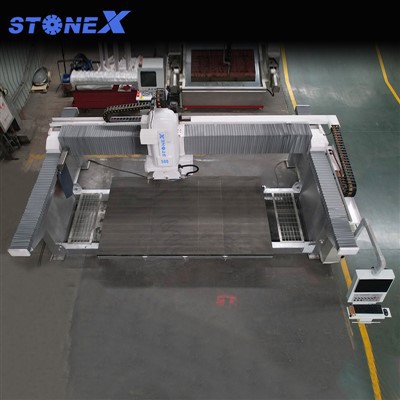
If you want to chat more about your specific operation, or learn what blades are best for your materials and machine setup, feel free to reach out to our team to start a conversation about how we can support your block cutting needs.
Block Cutting Machine REFERENCES
- Stone Fabricators Alliance. (2022). “Optimizing Diamond Blade Life for Natural Stone Cutting.” Annual Technical Report.
- Concrete Masonry Association. (2021). “Best Practices for Carbide Blade Maintenance in CMU Manufacturing.” Operations Guide.
- National Stone, Sand & Gravel Association. (2023). “Abrasive Wear Characteristics of Industrial Cutting Blades.” Industry Research Report.
- International Masonry Institute. (2022). “Machine Operating Parameters to Extend Cutting Blade Lifespan.” Field Training Manual.
Nantong Huayi Intelligent Equipment Co., Ltd.
As one of the most professional block cutting machine manufacturers and suppliers in China, we offer a wide range of products with superior quality. Please feel free to buy high quality block cutting machine at competitive price from our factory. Contact us for quotation.
Address: Dongsheng Stone Industry Park, Changjiang Town, Rugao City, Jiangsu Province, China
E-mail: claire@hualongm.com
WebSite: https://www.hystonemachinery.com/
