If you’re in the market for AC motors, you’ve probably heard the term “duty cycle” thrown around a lot—maybe by engineers at a factory, a mechanic fixing a conveyor, or even someone at a parts store. When I’m chatting with customers who come to our shop as an AC motor supplier, this is one of the first things I walk them through, because get it wrong, and you’ll end up with a motor that burns out prematurely, or worse, can’t keep up with its job. Let’s break this down like we’re talking over a coffee, no jargon overload, just straight stuff that matters. AC Motor
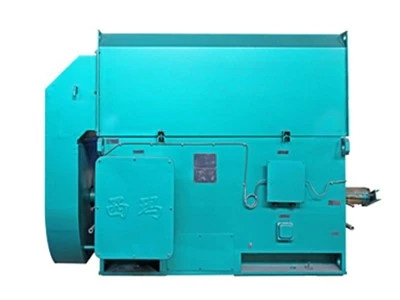
First, let’s keep it simple: duty cycle for an AC motor is basically the pattern of when it runs, how long it runs, and how much rest (or cool-down) it gets before it starts again. It’s not just “on or off”—it’s the ratio of time the motor is actually carrying a load, versus the total time in that full cycle of run and stop. Think of it like your workout schedule: if you lift weights for 10 minutes, then rest 10 minutes, your duty cycle there is 50%. If you lift 10 minutes, rest 2 minutes, that’s a way higher duty cycle, and your muscles get tired way faster. Same with a motor—except instead of muscles, it has windings that heat up, and heat is the #1 killer of AC motor life, full stop.
Wait, why does that ratio matter so much? Because when a motor is running, all that electricity going through its copper windings creates resistance, which makes heat. If you run it nonstop, that heat builds up way faster than it can dissipate, and before you know it, the insulation on the windings breaks down, short circuits, and boom—you’re out a motor. That’s where duty cycle comes in: it’s built for the specific job the motor is gonna do. For example, a fan in a warehouse that runs 24/7 is gonna have a way different duty cycle than a small motor that powers a garage door, which runs for 30 seconds then waits 5 minutes for the door to open and close.
Let’s name the most common duty cycles you’ll run into, because this is the stuff I reference every single day when matching motors to what a customer needs. First, the big one: Continuous Duty, or sometimes called S1 duty (yeah, we use the IEC standard codes, but I’ll skip the part numbers because who has time for that). Continuous duty is exactly what it sounds like: the motor runs nonstop, no rest, for as long as you need it. Think of a conveyor belt at a mining operation, a cooling fan in a server room, or a water pump that cycles nonstop to keep a building’s plumbing pressure up. These motors are built with thicker windings, better heat dissipation fins, and sometimes even separate cooling fans (fan motors that spin even when the main motor is idling) so they can handle never stopping. If you buy a continuous duty motor for a job that only runs a few minutes a day, you’re wasting money—those are built for constant heat, so they’re a bit heavier and more expensive, and you don’t need that overkill.
Then there’s Short-Time Duty, or S2. This is for jobs that run for a set amount of time, then shut off completely long enough to cool down. Let’s say a motor that powers a winch on a tow truck: it runs for 2 minutes to pull a car out, then needs 30 minutes to cool down before you use it again. That’s short-time duty. The motor here isn’t built to run all day, so its windings are a bit smaller, and it doesn’t have the heavy cooling parts of a continuous motor. If you run that short-time winch motor for 10 minutes straight, it’ll overheat in no time—ask me how I know, we once had a customer tow three cars in a row without letting the motor cool, and it fried before they even left our parking lot. Oops.
Next, Intermittent Duty, which comes in a few flavors. Most folks call this 10-minute duty, 30-minute duty, whatever, because it’s a cycle where you run for a fixed time, stop for a fixed time, and repeat. The classic example here is a crane hoist: it runs for 5 minutes to lift a load, stops for 10 minutes while you position it, then runs again. That’s a 33% duty cycle, right? 5 minutes on, 15 minutes total cycle = 33%. These jobs have varying loads too—sometimes you’re lifting a small load, sometimes a heavy one, so the duty cycle lets the motor cool enough between bursts so it doesn’t overheat. We also get people who mix this up: they buy a short-time motor for a crane that runs 5 minutes on, 5 minutes off, and wonder why it dies in a month. Short-time is only one run, no repeat cycles—intermittent is on and off all day, every day, so you need a motor built for that cycling.
Then there’s Variable Duty, sometimes called V duty, which is the wild card. This is for jobs where the on/off time or load changes all the time. Like a packaging line that runs fast during a shift, then slows down at night, or a food processing conveyor that stops occasionally to fix a jam. Variable duty motors are built to handle those inconsistent heat spikes without burning out. A lot of newer industrial setups use variable frequency drives (VFDs) with these motors, too—so you can adjust speed on the fly, which changes the load and the duty cycle mid-run. That’s why when a customer comes to me with a weird, messy cycle, I don’t just grab a standard motor—we test it or recommend a variable duty model that can roll with the punches.
Wait, let’s talk about a common mistake I see all the time: people buying a motor that’s rated for a higher duty cycle than they need, or lower. Let’s say you have a small boat lift motor that only runs 2 minutes to lift the boat, then waits 23 minutes before running again. If you buy a continuous duty motor for that, you’re paying way more for features you don’t need. But if you buy a short-time motor for a factory conveyor that runs 12 hours a day, nonstop? You’re gonna be replacing it every few months. I had a construction customer a couple years back who did that—he bought cheap short-time motors for his site’s water pumps, and they burned out every 3 weeks. Switched to continuous duty, and they’ve been running 18 months without an issue. The difference in cost? Wasn’t even that much in the long run, versus all the downtime he lost replacing them.
Another big point: duty cycle is tied to the motor’s horsepower, right? A 1HP motor rated for 30-minute duty isn’t the same as a 1HP motor rated for continuous. The continuous one can handle 1HP 100% of the time, while the 30-minute one might only handle 1HP for 30 minutes, and has to drop to 0.75HP during cool-down. That’s why when you’re shopping, don’t just look at horsepower—look at the duty rating, because that tells you how much load it can carry consistently over that run time. Heat is the big factor here, so the duty rating is basically a manufacturer’s promise that the motor won’t overheat under that specific on/off cycle.
Now, let’s connect this to what I do as an AC motor supplier. I don’t just sell motors off a shelf and hope they work. Every time a customer tells me their job—how long it runs, how often it stops, what load it’s carrying—I cross-reference that with the duty cycle. For example, a restaurant’s exhaust fan that runs 12 hours a day? Continuous duty, easy. A garage door opener that runs 10 seconds a time, a dozen times a day? That’s a low-cycle intermittent, so a lighter-duty motor is perfect. A robot arm on an assembly line that cycles every 2 minutes, all shift long? Variable duty, so we get a motor built for that frequent, slight load changes.
Wait, should I mention how to check your current motor’s duty cycle if you’re replacing it? Yeah, that’s a question I get all the time. First, look at the motor’s nameplate—most of them have the duty rating printed right there, usually like “S1” for continuous, “S2 10min” for short-time, “S3 30%” for intermittent. If you can’t read the nameplate, or it’s worn off, track your usage for a week: write down when the motor runs, how long, and how long it’s off. Calculate your own duty cycle, and then match that to a motor’s rating. If your cycle is 5 minutes on, 5 minutes off, you need a motor rated for at least 50% duty cycle, not 25% which would burn out.
One more common misconception: higher duty cycle = better motor. No, not really. A continuous duty motor is great for 24/7 jobs, but it’s bulkier, heavier, and costs more than a lower-duty motor. If you don’t need that, you’re wasting money. I have a lot of small business customers, like a bakery that runs a mixer 5 minutes a batch, 10 batches a day—they don’t need a $500 continuous duty motor, a $150 intermittent one works fine. Why would they pay extra for cooling fins and windings they never use? That’s just throwing money away.
Also, let’s talk about what happens if you mismatch. We see it all: overheating, shortened lifespan, sudden failures, even safety issues. If you’re running a motor with a too-high duty cycle for your job, it might run fine, but you’re wearing out parts faster than you need to. If you’re running a motor with too low a duty cycle, it’ll overheat, maybe even trip a breaker, or catch fire if it’s really bad. Last year, a small machine shop came to us with a lathe motor that kept blowing up—turns out they’d been running it nonstop, and it was rated for 15-minute duty. Simple fix, swapped it for continuous, and they haven’t had a problem since.
At the end of the day, duty cycle is all about matching the motor to your specific work. It’s not a one-size-fits-all thing. Whether you’re a factory manager picking motors for a new line, a contractor looking for a winch motor, or a small business owner replacing a garage door opener, taking the time to figure out your duty cycle will save you money on replacements, downtime, and unnecessary upgrades.
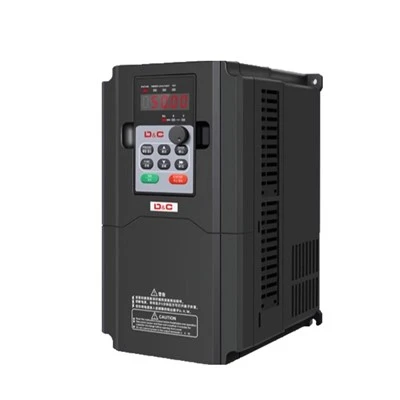
If you’re not sure what you need, don’t guess. Just reach out—we’ve helped hundreds of folks pick the right AC motor for their duty cycle, no confusing jargon, no hidden fees, just straight advice based on what you’re actually running. Whether you need a continuous duty motor for a warehouse fan, an intermittent one for a crane, or a variable duty model for a packaging line, we’ve got you covered. Don’t let a bad motor ruin your day—let’s talk about your needs, and get you a motor that works for how you work.
Starters & Drivers References
- "AC Motor Basics: Understanding Duty Cycles" – Electrical Construction & Maintenance, 2022
- International Electrotechnical Commission (IEC) Standard 60034-1: Rotating Electrical Machines – Rating and Performance, 2010
- "Common AC Motor Failures: Causes and Prevention" – Industrial Motor Control Magazine, 2021
- Motor Selection Handbook: Principles and Applications, 5th Edition, CRC Press, 2019
Xian Putai Electric Motor Equipment Co., Ltd.
Xian Putai Electric Motor Equipment Co., Ltd. is one of the most professional ac motor manufacturers and suppliers in China, also supports customized service with low price. Welcome to buy advanced ac motor in stock here from our factory. If you have any enquiry about quotation, please feel free to email us.
Address: Haibo Guangchang Fengcheng Nine Road Economical & Technological Development District Xi’an City Shaanxi Province – China
E-mail: sales@putaimotor.com
WebSite: https://www.putaimotor.com/
