Hey everyone, let’s cut to the chase—if you’re in the stadium game, you know how much rides on that perfect night game. I’m a stadium light supplier, and honestly? For way too long, we’ve treated lights like they’re just there to make it not dark. But if you’ve ever watched a broadcast where the players look washed out, or you saw a fan clip go viral because the camera couldn’t catch a game-winning catch? 9 times out of 10, it’s not the camera—it’s the stadium lights. Let’s break this down like we’re grabbing a beer after a match, no jargon, just real stuff that affects everyone from broadcasters to fans in the stands. Stadium Light
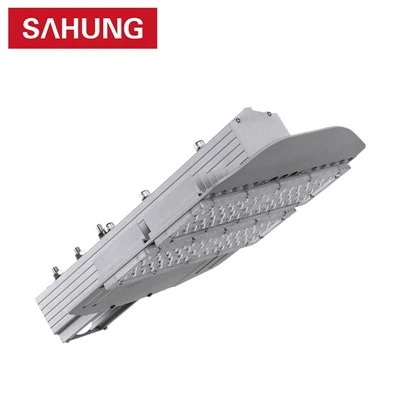
First off, let’s talk about the biggest headache: flicker. You’ve probably noticed it if you’ve watched a game on a phone—like that weird strobing when the camera pans across the field. That’s called temporal light modulation (TLM), and trust me, it’s way more than a minor annoyance. Stadium lights run on alternating current (AC), right? The power cycles 50 or 60 times a second, so the light dims and brightens with that wave. Old-school metal halide lights had a hard time keeping up, so you’d get a flicker so bad, it made some people dizzy. But even LED lights—modern ones—can have this issue if they’re not tuned right. Here’s why that matters for video: modern cameras shoot frames every fraction of a second. If a light’s dimming and brightening at the same rate as the camera’s frame rate, you end up with partial frames or that strobing effect. Broadcasters hate this because it makes replays look choppy, and fans get annoyed. I remember a college football game a couple years back where the network had to delay a live shot because the flicker was messing with their instant replay cameras—cost everyone time, and the fans missed a big play. On our end, as a supplier, we test every light we make for flicker compliance with both NFL and FIFA standards because skipping that step means a stadium gets stuck with gear that’s useless for broadcast.
Next up, color temperature and color rendering. Let’s keep this simple: color temperature is how warm or cool a light looks (think warm yellow vs. bright blue white), and color rendering index (CRI) is how accurate a light shows actual colors. Old metal halide lights were terrible here—they’d make a bright green jersey look dull, or a red end zone zone marker look pink. For video, that’s a disaster. Broadcasters spend thousands on camera calibration to get colors right, and if the stadium lights are throwing a weird tint, all that work goes out the window. Players’ uniforms look off, the field’s grass looks wrong, even the referee’s flag can blend in. CRI matters too—a low CRI means small details, like a cleat’s scuff mark or a player’s sweat, disappear on camera. I’ve had stadium managers tell us they switched to our LED lights just because their broadcast team begged them to—their previous lights were so bad, they were getting complaints from viewers about “flat” games. It’s not just aesthetics, either: if a referee can’t see a player’s uniform number clearly on a replay because the color is off, that can lead to bad calls. Not good for anyone.
Then there’s light spill and glare. This is the stuff that bugs both fans and cameras. Glare is that harsh bright spot right in your eyes when you look at a light, and for video, it causes lens flare. If you’ve ever seen a broadcast where the outfield looks blurry or there’s a weird white smudge where the sun or a light is? That’s lens flare from bad stadium lights. The problem is, a lot of suppliers just crank up the wattage to make the field bright, which creates way too much spill—light going where it shouldn’t, like into camera positions or even the stands. For cameras, especially high-speed ones used for replays, glare can blow out parts of the image, making it impossible to track a player’s movement. We design our lights with directional optics, so the light only goes where the field is needed—no spill into camera slots. That cuts down on flare a ton. I remember a soccer stadium we retrofitted last year; their old lights were causing so much flare on the broadcast camera behind the goal, the network had to reposition the camera mid-game. After we installed our lights, they never had that issue again. Fans win too, because less glare means they can actually watch the game from their seats without squinting.
Wait, let’s not forget about light uniformity. That’s how evenly bright the field is, right? If one end of the field is way brighter than the other, players can’t see as well, and cameras have to adjust their exposure constantly. When a camera is set for a bright spot, the dark parts get too dim, and vice versa. That makes replays look inconsistent—one play looks sharp, the next looks grainy. For broadcasters, that’s a nightmare because it means they can’t use the same settings for a whole game. Our lights are calibrated to have a uniformity of at least 0.7 (that’s a standard measure) across the entire field, so every part from the hash marks to the end zones is the same brightness. A high school stadium we worked with recently told us their JV games looked way more professional after we fixed uniformity—their old lights had a dark patch in the corner of the end zone, and the cameras kept losing the ball when it went over there.
Now, let’s talk about something not a lot of people bring up: frame rate sync. Cameras today can shoot 24 frames per second (film style), 60, 120, even 240 frames per second for slow-mo. If your stadium lights aren’t synchronized with the camera’s refresh rate, you get that flicker we mentioned earlier, but also weird distortions—like a player’s leg looking bent in a way it never would, because the frame was caught at the wrong time in the light’s cycle. Some old lights run on separate power grids for different parts of the stadium, which means their cycles are out of sync, leading to different flicker across the field. We build all our lights to run on a single, synchronized power cycle, so no matter where the camera is, the light’s output matches the frame rate. That’s not just a nice-to-have—it’s required for any stadium that wants to stream or broadcast games to a national audience.
Let me be real with you, though—every stadium is different. A small local baseball field has way different needs than a 70,000-seat NFL stadium. Some stadiums don’t care about broadcast as much, they just want fans to see the game. But even then, bad lights hurt the fan experience—if you’re sitting in the stands and you can’t tell a catch from a drop because the light is dim, that’s a problem. As a supplier, we don’t just sell lights and leave. We work with each stadium to test their current setup, figure out what their biggest pain points are (is it flicker? Glare? Uniformity?), and customize a solution. Last month, a minor league stadium reached out because their lights were making their stream look grainy—turns out their old lights were only 150 watts per fixture, which was too dim for the cameras. We swapped in our higher-output, uniform LED fixtures, and their stream resolution went up so much, they started getting requests to host regional playoff games.
Wait, let’s address the myth that LED lights are always the fix. A lot of people think “LED = good for video,” but that’s not true. Cheap LED lights from no-name suppliers often have worse flicker or worse color rendering than old metal halide. We’ve had stadiums come to us after buying cheap lights online that made their broadcasts look worse—said they’d rather go back to the old metal halide. That’s why it’s not just about the type of light, it’s about the design, the power supply, and the calibration. For example, our lights use constant-current drivers that eliminate almost all flicker, and we test every fixture with camera equipment to make sure it works with standard broadcast cameras before we install them.
Another thing: long-term impact. Stadium lights are a big investment, so you don’t want to have to replace them in 5 years because they’re messing up video. Our lights have a lifespan of over 50,000 hours, which is way longer than most, and they’re built with materials that hold their color temperature over time. Cheap LEDs can lose their brightness by 30% in 3 years, which makes the field dimmer for cameras. We use high-quality diodes that keep brightness consistent, so a stadium’s video quality stays the same for decades.
Let’s wrap this up with a real example. Last year, we worked on a college football stadium that was hosting a bowl game, and their broadcast partner warned them that their current lights were non-compliant with broadcast standards. The network threatened to pull coverage if they didn’t fix it in 6 months. The stadium manager was panicking—he thought he’d have to spend a fortune on a whole new setup in a hurry. We did a full audit, found that their old metal halide lights had a flicker rate of 12%, which was over the 1% limit for broadcast. We installed our LED fixtures, synchronized the power, adjusted the optics to cut down on glare, and retested. The flicker rate dropped to 0.3%, color rendering went up from 72 to 95, and the uniformity was perfect. The network not only kept the coverage, they commented that it was the best-looking bowl game broadcast that year. The stadium ended up hosting three more bowl games after that, and their fan engagement went up because the game looked better on TV.
Look, whether you’re a stadium manager, a broadcaster, or even a fan who’s ever complained about a blurry broadcast, stadium lights aren’t just a utility. They’re a critical part of how the game is captured and viewed. At the end of the day, bad lighting doesn’t just ruin a video—it ruins the whole experience. If you’re dealing with video issues at your stadium, whether it’s flicker, glare, color problems, or anything else, we can help. We’ll do a free on-site audit, walk you through what’s causing the problem, and put together a solution that fits your budget and your needs. No hard sell, no jargon, just actual results that make a difference for your games.
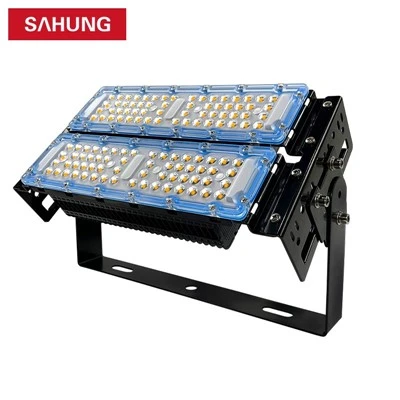
If you’re ready to talk, just reach out—we’ll get back to you fast. No complicated forms, no runaround, just straight talk about making your stadium look as good on camera as it does in person.
LED High Bay Light References:
- International Association of Stadium Managers. (2022). Stadium Lighting Standards for Broadcast and Live Events.
- Society of Motion Picture and Television Engineers. (2021). Recommended Practice for Stadium Light Flicker Compliance for Video Capture.
- FIFA. (2023. Stadium Lighting Specifications for Professional Match Broadcast.
- National Football League. (2022. Lighting Requirements for Broadcast and Media Operations.
Hangzhou Shanghong Electronic Technology Co., Ltd.
We are one of the most experienced stadium light manufacturers and suppliers in China. With a professional production team, we offer a wide range of products with superior quality. Please feel free to wholesale custom made stadium light from our factory.
Address: 5F, Building A, No.7 Xiyuan 2nd Road, Xihu District, Hangzhou City, Zhejiang, China.
E-mail: sales3@sahung.com
WebSite: https://www.sahung-light.com/
