If you’ve ever stepped onto a metal fabrication shop floor, you’ve likely seen large, boxy milling machines whirring away, carving parts out of solid metal blocks. But if you’ve stopped to ask the operators or production managers what kind of milling machine that is, you’ve probably heard them distinguish between two common types: Horizontal Machining Centers (HMCs) and Vertical Machining Centers (VMCs). As someone who’s spent over a decade selling HMCs to job shops, aerospace manufacturers, and automotive part suppliers, I’ve lost count of how many times customers have walked into my showroom thinking these two machines are interchangeable—only to realize later that choosing the wrong one cost them weeks of production delays and thousands of dollars in rework. Horizontal Machining Centers
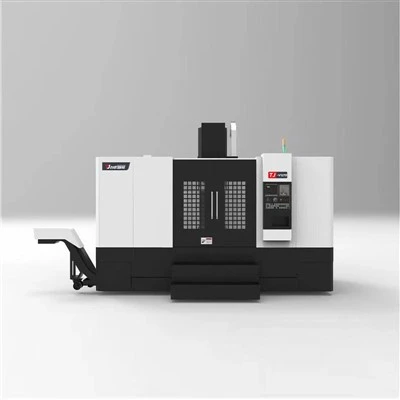
Let’s start with the basics, because the core difference between HMCs and VMCs is simpler than it sounds: it’s where the cutting tool sits, relative to the worktable. A VMC has a vertical spindle—meaning the tool points straight up and down, like a drill press mounted to the ceiling—while an HMC has a horizontal spindle, meaning the tool sits parallel to the floor, like a long drill bit sticking out from a wall. That one tiny structural change ripples through every part of how the machines work, what parts they can make, and how much they cost to run. I learned this the hard way early in my sales career, when I convinced a small electronics prototype shop to buy a VMC for a 500-piece order of aluminum sensor housings. They ran into a wall halfway through the order because the VMC could only reach the top and sides of each housing, leaving tight internal grooves that required multiple setups and hours of hand finishing. By the time I walked the shop owner through an HMC demonstration two weeks later, he’d already wasted $12,000 on scrapped parts and lost a 30% repeat order to a competitor with the right machine. That story stuck with me, and it’s why I never skip walking potential customers through real parts, not just spec sheets, when we talk about the difference between these two workhorses.
Let’s break down the key differences, starting with setup and accessibility, because that’s where many production bottlenecks start. On a VMC, the worktable is fixed in a vertical cavity, so the cutting area is open from the top. That makes it easy to load and unload small parts, but if you’re working on a large, heavy part—say, a 200-pound steel engine block for a truck—you have to lift that block up from the floor to set it on the VMC table, then clamp it in place. Most VMCs have a small work envelope, so you can only work on one large part at a time, and loading and unloading usually requires a crane or a forklift, which means shutting down the machine for 20 to 30 minutes each time. On an HMC, the worktable sits inside a fully enclosed horizontal chamber, and the spindle extends out from the side to reach the part. The chamber isn’t just for safety—it acts as a chip and coolant containment system, which is a huge plus when you’re machining wet, stringy chips from materials like titanium or stainless steel. But the bigger benefit for production is the rotary pallet system that almost all HMCs come with. Instead of loading and unloading parts one at a time, many HMCs have two pallets: one inside the cutting chamber being machined, and one outside where operators can load or unload parts while the machine is running. That means no downtime for setup—operators can swap out a finished part for a raw one in 5 minutes flat, and the machine never stops producing. VMCs can have pallet changers too, but they’re far less common, and they work much slower, because the vertical opening makes it harder to move heavy pallets in and out without bumping the cutting tool or the worktable.
Next up is cutting performance, which is the make-or-break factor for most manufacturers. The horizontal spindle design of HMCs isn’t just a gimmick—it’s built for deeper, more stable cuts, especially on heavy, dense materials like steel, Inconel, or thick aluminum plates. Because the tool is mounted horizontally, it’s supported along its entire length by the spindle, rather than only at the top like a VMC tool. That means less tool deflection, less vibration, and smoother, more precise cuts. For parts that need tight tolerances—like aerospace turbine blades, medical implants, or gear housings for cars—that stability is non-negotiable. I had a customer a few years back who made helicopter transmission parts; he tried running a batch of 100 gear housings on a VMC, and 15 of them were rejected because the gear teeth had a 0.003mm wobble caused by tool deflection. When he switched to an HMC, that number dropped to zero, and his cutting speed went up by 25% because he could use faster feeds without sacrificing accuracy.
VMCs aren’t bad at cutting, of course—they’re just better for different jobs. Their vertical spindle is ideal for small, light, high-precision parts that don’t need deep cuts or heavy material removal. If you’re making prototype circuit board enclosures, small plastic components, or jewelry, a VMC is perfect, and it costs a third to half as much as a comparable HMC. But that same vertical limitation becomes a problem for parts that require machining on multiple sides. Most complex parts aren’t flat—they have features on the top, bottom, and sides, which means you have to flip the part and re-clamp it multiple times on a VMC. Each time you re-clamp, you introduce a small margin of error: a few thousandths of a millimeter that adds up, and that’s how 10% of your parts get scrapped. HMCs solve that problem with full 4th-axis rotary capability, which lets you rotate the part as it’s being machined, so you can access all sides in one single setup. No re-clamping, no extra error, no lost time. For a customer running high-volume production runs—like 10,000 engine parts a year—that single setup saves thousands of dollars in labor and scrap costs.
Let’s talk about chip handling and workspace, too, because these two machines take up very different amounts of space and keep their shop floors clean in very different ways. When you machine metal, you produce thousands of pounds of chips, which are hot, sharp, and slippery. On a VMC, those chips fall straight down onto the worktable and into the open base of the machine, which means you have to shut down the machine multiple times a shift to rake chips off the table and dispose of them. That’s not just annoying—it’s a safety hazard, too; operators are leaning over the open cutting area, reaching into a machine that’s only seconds away from stopping, and working around hot, sharp metal. HMCs, with their enclosed horizontal chamber, catch all the chips as they fall off the horizontal tool, and most have built-in chip conveyors that move the chips directly into a collection bin outside the machine. That means less manual labor, less risk of injury, and a cleaner shop floor. The only downside? HMCs are bigger than VMCs, usually taking up 30 to 50% more floor space. That’s a trade-off many manufacturers are willing to make, but if you’re a small job shop with a tight 10×10 meter space, a VMC is almost always the better fit.
Now, let’s get real about cost, because that’s the first question most customers ask. A new VMC can range from $50,000 to $200,000, depending on size and features, while a comparable HMC starts around $150,000 and can go up to $500,000 for high-end, multi-pallet models. But before you write off HMCs as too expensive, you have to calculate the total cost of ownership, not just the upfront price. Over a 5-year period, an HMC’s higher cutting speed, fewer setups, and lower scrap rates can save you 20 to 30% compared to a VMC running the same high-volume job. I’ve had customers who bought a VMC to save money, then switched to an HMC within 2 years because they were losing more to scrap and downtime than the extra cost of the machine.
So when do you pick a VMC, and when do you pick an HMC? Let me give you a few quick rules of thumb, based on what I’ve seen work for hundreds of customers. If you’re doing low-volume prototyping, small parts, or parts that only need machining on one or two sides, go with a VMC. They’re easy to operate, cheaper, and don’t require a lot of floor space. If you’re doing high-volume production, complex parts with features on multiple sides, or working with dense, hard materials like titanium or stainless steel, an HMC is almost always the right call. The only time I’ll push back on a customer who thinks they need an HMC is if their production volume is too low to justify the upfront cost, or if they’re only making small, simple parts that a VMC can handle faster and cheaper.

I still get a kick out of walking a potential customer through a live demo of both machines—watching their face when they see the HMC swap a finished part for a raw one in 5 minutes, no downtime, and no need to flip the part. I’ve seen job shops grow from 2 employees to 20, all because they upgraded from a VMC to an HMC and doubled their production. I’ve also seen startups save thousands of dollars by sticking with a VMC for their prototype runs, instead of overspending on a machine they don’t need.
Gantry Machining Center At the end of the day, the difference between HMCs and VMCs isn’t about which is “better”—it’s about which fits your specific needs. I’ve never tried to sell an HMC to a customer who only needs a VMC, and I’ve never lost a sale by recommending the right machine for their job. If you’re sitting there right now, wondering which one is better for your next project, whether you’re a small shop just getting started or a large manufacturer looking to scale, I’d be happy to walk you through the specs, show you some sample parts, and even arrange a time to see both machines running live. You don’t have to make that call on your own—just reach out and let’s talk through what you need to build, how many you need to make, and how we can help you get there without wasting time or money.
References
- Smid, P. (2008). CNC Programming Handbook: A Comprehensive Guide to Practical CNC Programming. Industrial Press Inc.
- Oberg, E., Jones, F. D., Horton, H. L., & Ryffell, H. H. (2020). Machinery’s Handbook: Reference Book for Mechanical Engineering. Industrial Press Inc.
- American Machine Tools Association. (2022). Horizontal vs. Vertical Machining Centers: A Guide for Manufacturers. AMTA Publications.
Guangdong Taiji Intelligent Equipment Co., Ltd.
With abundant experience, we are one of the most professional horizontal machining centers manufacturers and suppliers in China. Please feel free to buy cheap horizontal machining centers for sale here from our factory. For price consultation, contact us.
Address: Room 101, Building 2, No. 5 Jinghai East Road, Chang’an Town, Dongguan City, Guangdong Province
E-mail: sale@gdtaijicnc.com
WebSite: https://www.gdtaijicnc.com/
