When I first started my career as a carbon steel bar supplier, I’ll admit I was a bit defensive when people asked about the downsides of the product. For decades, carbon steel bars have been the backbone of construction, manufacturing, and countless industrial applications—from building skyscrapers to crafting heavy machinery. But after 12 years in this business, talking to contractors, engineers, and fabricators every week, I’ve learned that ignoring the disadvantages of carbon steel bars does my clients a disservice. It’s not about badmouthing a product we specialize in; it’s about giving honest, actionable information so folks can make the right choice for their projects. Carbon Steel Bar

Let’s start with the most well-known issue: corrosion. Carbon steel, at its core, is an alloy of iron and carbon—small amounts of other elements can be present, but those two are the stars. Iron, when exposed to moisture and oxygen, oxidizes. That’s rust. Unlike the protective layer that forms on stainless steel (chromium oxide, which seals the metal and stops further corrosion), rust on carbon steel is porous and flaky. It doesn’t stop the damage; it actually traps more moisture against the underlying metal, leading to a slow, steady degradation. I’ve seen this firsthand: a bridge beam we supplied for a rural road project, left uncoated for a few extra weeks during construction, developed enough surface rust that the team had to sandblast it before they could apply a protective coating. That added time, labor, and cost—all avoidable if they’d opted for a different material or planned for corrosion protection upfront. For outdoor projects, or even interior spaces with high humidity (like food processing plants, where moisture is constant), this isn’t a minor nuisance. It can compromise the structural integrity over time. A study from the National Association of Corrosion Engineers (NACE) estimates that corrosion costs the U.S. economy over $275 billion annually, and carbon steel accounts for a huge chunk of that because it’s so widely used without proper safeguards.
Next up, carbon steel bars have a lower strength-to-weight ratio compared to some modern alternatives. Strength-to-weight ratio is just what it sounds like: how much load a material can handle relative to its weight. Carbon steel is strong, but it’s also dense—heavier than aluminum alloys and even some high-strength composites. Let’s say you’re working on a aerospace component: every pound saved reduces fuel costs, so a lighter material with comparable strength would be better. For large-scale construction, that extra weight translates to higher transportation costs, heavier foundation requirements, and more labor to install. I had a client a few years back who was building a warehouse in a remote part of the country. They initially went with carbon steel bars for the structural frame, but when we crunched the numbers, the total weight of the steel would have meant they needed thicker, more expensive concrete footings. Swapping to a high-strength low-alloy (HSLA) steel bar cut the total weight by 20%, bringing down footing costs by almost 15%. Now, carbon steel is still strong enough for most everyday uses—residential framing, small machinery parts, general hardware—but when weight is a critical factor, it falls short. That’s not to say it’s bad; it’s just a trade-off. If you don’t account for that trade-off, you end up with unnecessary expenses.
Welding and fabrication challenges are another point that’s easy to overlook. Carbon steel bars, especially those with higher carbon content, can be prone to a problem called cracking when heated and then cooled too quickly during welding. This is known as hardening cracking, or cold cracking, and it happens because the high carbon content makes the metal more brittle when it’s rapidly quenched. I’ve had fabricators come to me frustrated because a weld they did on a medium-carbon steel bar developed tiny cracks a few days later. The fix? Preheating the steel before welding, using specialized electrodes, and controlling the cooling rate—all of which add time, skill, and cost. Low-carbon steel is easier to weld, but it’s less strong. So you’re stuck balancing weldability and strength. Compare that to stainless steel, which is more forgiving in welding, or aluminum, which melts at a lower temperature and is simpler to shape. For small jobs, maybe it’s not a big deal, but for large industrial projects where hundreds of welds are needed, that extra work adds up. I always advise clients to tell me if their project will involve a lot of welding, because I can point them to the right grade of carbon steel that will minimize those issues. But if someone doesn’t know to ask, they end up with delays and rework.
Another disadvantage: carbon steel bars are susceptible to temper embrittlement when exposed to certain temperatures over time. Temper embrittlement happens when the metal is held in a temperature range of 375 to 575 degrees Celsius (700 to 1065 degrees Fahrenheit) for long periods. During that time, impurities like phosphorus, sulfur, and arsenic can move to the grain boundaries of the steel, making it more brittle. I’ve seen this in industrial boilers, where the steel parts sit in that temperature range for years. A component that was originally strong enough shattered unexpectedly because of temper embrittlement. It’s not a problem for most everyday applications—residential buildings don’t operate at those high temperatures—but for heavy industrial uses, like power plant components, chemical processing equipment, or parts that handle extreme heat, it’s a real risk. Unlike some alloys that are designed to resist this, standard carbon steel doesn’t have that built-in protection. That means extra testing, maybe more frequent inspections, and potential replacements sooner than expected.
Cost-wise, wait—isn’t carbon steel supposed to be cheap? It can be, but when you factor in the long-term costs, it’s not always the most cost-effective option. The initial price of a carbon steel bar is lower than stainless steel, but the costs of corrosion protection, maintenance, and eventual replacement can add up. Let’s take a residential deck: using pressure-treated wood is cheaper upfront, but carbon steel balusters will rust and need to be replaced every 15 to 20 years, while aluminum balusters last a lifetime. For a commercial bridge, the initial cost of carbon steel might be 30% lower than a corrosion-resistant alloy, but over 50 years, the maintenance and repair costs can be double the initial investment. I’ve had clients who thought they were saving money by going with carbon steel, only to call me a few years later needing to replace rusted parts. It’s a short-term vs. long-term cost trade-off that’s easy to miss if you only look at the sticker price.
Also, carbon steel bars have a lower fatigue resistance compared to some other materials. Fatigue resistance is how well a material holds up to repeated, cyclic loading—like the weight of a truck crossing a bridge every day, or a machine part that moves back and forth thousands of times a minute. Over time, even a load that’s well below the material’s maximum strength can cause tiny cracks to form, which grow and eventually lead to failure. Carbon steel is decent for static loads, but for dynamic, repetitive loads, it’s not the best. I had a client who was building a conveyor system for a mining operation. The conveyor runs 24/7, with hundreds of tons of material moving on it every hour. They initially went with carbon steel bars for the conveyor frame, but after six months, a section of the frame cracked from repeated stress. Swapping to a high-strength steel bar with better fatigue resistance fixed the problem, but it meant they had to redo part of the installation. Again, this isn’t a flaw that makes carbon steel useless—it’s just not the right choice for every application. The key is knowing when it works and when it doesn’t.
Now, I don’t want this to come off as a slam on carbon steel bars. They’re still an incredibly versatile, reliable product for millions of uses. But as a supplier, my job isn’t just to sell what I have—it’s to be honest about its downsides so clients can make the best decision. I’ve built my business on that transparency, and I’ve found that clients who trust me to tell them when carbon steel isn’t the right choice come back for more when it is. For example, if a contractor is building a small storage shed in a dry, temperate climate, carbon steel is perfect—it’s strong, easy to work with, and affordable. But if they’re building a pool house near the ocean (where salt air accelerates corrosion), I’ll suggest a galvanized carbon steel bar or even stainless steel. Galvanizing is a common fix for corrosion: coating the steel with a layer of zinc, which acts as a sacrificial anode—so if the zinc scratches, it corrodes instead of the steel. But galvanizing adds cost, and it doesn’t work well for high-temperature applications, so I have to explain that too. A lot of clients don’t know that galvanized steel can’t be welded without special processes, so I make sure to walk them through all those details.
I also make it a point to share these disadvantages with new customers, because I’ve seen what happens when someone buys carbon steel without understanding its limits. Last year, a small construction company ordered carbon steel bars for a patio cover in a coastal town. They skipped the galvanizing step, thinking it was unnecessary for a low-rise structure. Within 18 months, the bars were so rusted the patio cover had to be taken down. They called me, upset, and I explained what went wrong—no one told them salt air would cause rapid corrosion. We worked out a solution, but it would have been cheaper and easier if they’d planned for it from the start. That’s why I always tell clients to share every detail about their project: location, environment, load requirements, even how long they want the structure to last. That way, I can recommend the right grade of carbon steel, or suggest an alternative if needed.
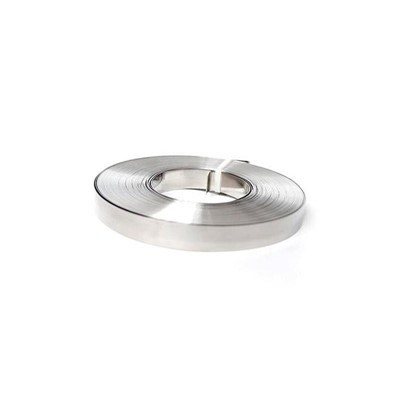
At the end of the day, the disadvantages of carbon steel bars are manageable with the right knowledge. Corrosion can be mitigated with coatings, galvanizing, or proper design. Welding issues can be avoided by choosing the right grade and following best practices. Fatigue and embrittlement are only risks in specific high-stress environments, so they don’t apply to most everyday uses. And the long-term cost trade-off is something every client needs to consider, but when you factor in the initial affordability, carbon steel still wins for millions of projects. If you’re working on a project and wondering if carbon steel bars are the right fit, I’m here to walk through the pros and cons, answer your questions, and help you choose the best material for your needs. Feel free to reach out to discuss your project details.
Hot-Dip Galvanized Steel Coils References
- National Association of Corrosion Engineers (NACE). (2022). International Measures of Prevention, Application, and Economics of Corrosion Technologies Study.
- American Iron and Steel Institute (AISI). (2021). Carbon Steel Grades and Their Applications.
- British Standards Institution (BSI). (2020). Guide to Welding Carbon Steel Bars for Structural Applications.
- International Organization for Standardization (ISO). (2019). ISO 6892: Metallic Materials—Tensile Testing at Ambient Temperature.
- Journal of Materials Engineering and Performance. (2020). Temper Embrittlement in Carbon Steels: Causes, Mitigation, and Testing Methods.
Shanxi Midas Industrial Co., Ltd.
We’re known as one of the most professional carbon steel bar manufacturers and suppliers in China. With abundant experience, we warmly welcome you to buy cheap carbon steel bar made in China here from our factory. For price consultation, contact us.
Address: 28th, Huanqiu Jinrong Zhongxin, Xieyuan Road, Changfeng Business District, Taiyuan City, Shanxi Province, China
E-mail: midassteel@163.com
WebSite: https://www.midassteel.com/
