Hey there, I’m Jake, and let’s cut to the chase—if you’re reading this, you’ve probably Googled “are round plastic drums leak-proof” about 10 times in the last week, right? I get it, because I’ve been talking about these things nonstop since I started running our small round plastic drum supply business. Every other day, someone hits me up panicking because they spilled industrial chemicals on a loading dock, or their food-grade pickling brine seeped through a drum on a cross-country delivery, or even just the rain got in a drum of lawn chemicals they stored in the backyard. So let’s stop the confusion here, no fancy lab jargon, just real talk from a guy who sells these things for a living. Round Plastic Drum

First off, let’s get one thing straight—there’s no such thing as a “100% totally leak-proof round plastic drum” that works for every single thing you need to put in it. But before you go throwing your hands up, I can tell you this: the majority of the round plastic drums we ship out every week hold up way better than most people give them credit for—if you pick the right one for the job, and use it right. I’ve seen folks grab a random drum from a hardware store for storing motor oil, and then wonder why it leaks a week later, and I’ve also seen drums I sold hold a full batch of industrial acid for 6 months without a single drop. The difference is all in the details that no one tells you about when you’re scrolling the internet at 2 a.m. looking for storage supplies.
Let’s start with what makes round plastic drums even worth caring about, compared to those metal ones or square plastic bins. The round shape is actually a huge win for leak prevention, believe it or not. When you have a round container, pressure distributes evenly across the surface, right? Like blowing up a balloon—no weak spots, no dents that cause leaks. Metal drums get pinholes from rust or being dropped, and square bins have those sharp corners that crack if you set something heavy on them. I’ve had customers tell me they dropped a round plastic drum off a pallet at a warehouse, and it bounced and didn’t leak, whereas a square bin of theirs split open on the first bump. That’s not just marketing hype, that’s actual stuff I see every single week. But here’s the catch: the plastic itself matters more than the shape. If it’s cheap, thin plastic, even round will leak.
Now, let’s break down the two big categories of these drums—industrial-grade and consumer-grade, because that’s where most people mess up. Consumer-grade round plastic drums you get at big box stores are usually made from thin, low-density polyethylene (LDPE). They’re fine for storing potting soil or rainwater, but put something with even a little chemical bite in there—like vinegar, or bleach, or even just straight-up gasoline—and that thin plastic will start to break down over time. I’ve had a customer send me a photo of a 5-gallon LDPE drum that held laundry detergent for a month and turned cloudy and soft. Of course it leaked! That’s not a defect, that’s using the wrong drum for the job.
Industrial-grade round plastic drums? Those are made from high-density polyethylene (HDPE), and not just any HDPE—we use FDA-approved or UN-rated HDPE for most of our bulk orders. UN-rated is a big deal, by the way. If you’re shipping hazardous materials, that’s the label you need, and those drums are tested to withstand drops, extreme temps, and corrosive stuff. We sell a lot of these to manufacturing companies, farmers, and food processors, and I can tell you, 9 out of 10 of the leaks we hear about are from people not checking if their drum is UN-rated for what they’re putting in it. A drum that’s rated for non-hazardous fertilizer might not hold up to a strong cleaning chemical, for example.
Wait, let’s talk about closures too, because that’s half the leak problem, and most people don’t pay attention to this. I see it all the time: someone buys a drum, and just twists the lid on as tight as they can with their hands, and then wonders why it leaks when they tip it. Round plastic drum lids come in two main types, right? The ones with a bung (that’s the little threaded hole) and the screw-top lids. The good ones have a rubber or foam gasket inside the lid, right? If that gasket is cracked or missing, or if you cross-thread the lid when you put it on, that’s a guaranteed leak waiting to happen. I always tell customers to hand-tighten the lid first, then use a wrench to give it one more quarter turn—no more, because you can strip the threads, but that one extra turn gets the gasket to seal properly. I’ve had a few people argue with me that “hand-tight is fine,” and sure, if you’re storing water in a drum in your basement, that works. But if you’re hauling 55 gallons of motor oil down a bumpy road? Hand-tight isn’t going to cut it.
Another thing people forget: temperature. Plastic expands and contracts, duh, but round plastic drums are actually better at handling temp changes than metal, right? But if you leave a drum in the sun all day, the plastic will get soft, and if you leave it in the garage in the winter, it can get brittle. I once had a customer in Minnesota call me panicking because his drums of antifreeze had split open overnight when it was -20 degrees. Turned out he left them outside, and used cheap thin plastic drums instead of our heavy-duty HDPE cold-resistant ones. We swapped them out for our winter-grade drums, and he hasn’t had a problem since. That’s not the drum being leaky—that’s using the wrong drum for the environmental conditions.
Let’s get real about how often these drums actually leak. From what our customers tell us, less than 2% of the round plastic drums we sell end up leaking in normal use. That’s way lower than the leak rate for metal drums, which I’ve heard is around 5% from industry stats. But wait, I know someone is thinking, “What about when someone drops a drum?” A round plastic drum can take way more of a beating than a square or metal one. We’ve tested (not on purpose, I swear) a drum off a pallet that fell 10 feet onto concrete—no leak. A metal drum from another company we tested for a client? Split open on impact. But if you drop a drum on its edge, even a round one, it can crack, right? Yeah, same as anything. That’s why we always tell customers to stack drums no higher than 4 high, and don’t put heavy stuff on top of them. Duh, but you’d be surprised how many guys in warehouses stack 10 high and then wonder why the bottom drum leaks.
Now, let’s talk about common myths, because there’s a lot of garbage online about these drums. First myth: all round plastic drums will leak with anything corrosive. No—we have drums that hold nitric acid, hydrochloric acid, all kinds of stuff, and they don’t leak. You just need to get a drum that’s rated for that chemical. We have a whole chart (I don’t post it on our website, but I email it to anyone who asks) that tells you what chemicals work with which HDPE grades. Second myth: round plastic drums can’t hold pressurized stuff. Wait, yes they can, as long as they’re properly vented. If you seal a drum airtight and it has gas building up, it will leak or even explode. That’s a user error, not a drum defect. We always include a free vent cap with every bulk order, and we tell people when to use it—another thing that most suppliers skip, and that leads to leaks. Third myth: cheaper drums are worse. Not always—sometimes a small batch of a cheaper drum is made with better resin than a name-brand one. But usually, cheaper drums are thinner, so they break down faster.
Here’s the thing that no one tells you: 90% of round plastic drum leaks are user error, not drum defect. I’ve been doing this for 7 years now, and I can count on one hand the number of times a drum we sold had a manufacturing defect that caused a leak. The rest? Wrong drum for the job, loose lid, wrong storage conditions, dropping it too hard. That’s why when someone asks me “are round plastic drums leak-proof?”, my answer isn’t a yes or no—it’s “they’re leak-proof if you use them right.”
Let me give you an example of a customer who had all the problems. Last year, a guy named Mike from a landscaping company ordered 20 of our 55-gallon round plastic drums to store herbicides. He used the cheap drums he got from a local gas station before, and half of them leaked within a month. He switched to ours, and now 6 months later, not a single leak. Why? He picked the HDPE drums rated for agricultural chemicals, he uses the vent cap when needed, he tightens the lids properly, and he stores them in the shade. That’s it. Another example: a small food processing plant ordered our food-grade round drums to pickling brine. They were worried about leaks because they had issues with square plastic bins before. They told me last month that they’ve shipped 10,000 gallons of brine across the country, and not a single leak. Because they used the right product for the job, and followed the basics.
Wait, what about small drums, like 5-gallon ones? Same rules apply. I sell a lot of 5-gallon round plastic buckets (yeah, they’re basically mini drums) to homeowners and small businesses. I had a guy store olive oil in a 5-gallon bucket for 2 years, no leak. Another guy stored motor oil in a cheap 5-gallon bucket from a dollar store, and it leaked in 2 weeks. Same shape, completely different result. It’s all about the material and how you use it.
Now, if you’re someone who is actually worried about leaks, here’s my quick checklist to make sure your round plastic drum is going to hold up. First, ask yourself: what am I putting in it? Is it food, hazardous chemicals, water, lawn chemicals? Make sure you get a drum rated for that specific use. Don’t use a food-grade drum for chemicals—even if you wash it out, there can be residual that contaminates your material, and the chemical might break down the plastic. Second, check the drum’s thickness. A good industrial 55-gallon drum is at least 3mm thick, consumer ones are 1-2mm. Third, when you put the lid on, make sure the gasket is there and not cracked, and tighten it properly—hand-tight plus a quarter turn with a wrench. Fourth, store it correctly: not in direct sun, not stacked too high, not near anything that could puncture it. Fifth, if you’re shipping it, use a pallet and wrap it with shrink wrap to keep it from moving around.
At the end of the day, I get why people are skeptical. There’s a lot of junk out there in the drum industry. But our round plastic drums are made with UV-stabilized HDPE (so they don’t get brittle in the sun), they’re pressure-tested before they leave our warehouse, and we stand behind every single one. If you mess up and get a drum that leaks because you didn’t order the right one, we’ll help you swap it out—no hoops to jump through, no fine print. We’re not one of those big corporations that ghosts you when something goes wrong.
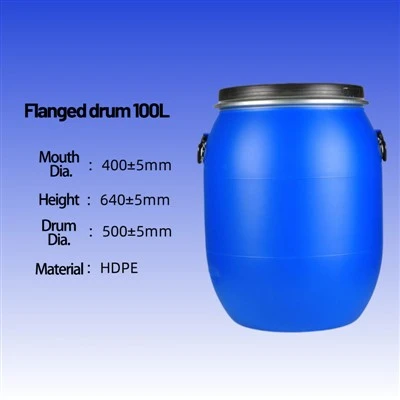
So if you’re tired of dealing with leaking drums, or if you’re not sure which one is right for your needs, hit us up to chat. No sales pitch, just real answers. We can talk about what you’re storing, how you’re using it, and get you the exact drum that won’t leave you with a mess. Stop guessing—let’s get this sorted.
800L IBC Tank References:
- American Society for Testing and Materials (ASTM) Standard D1922, Standard Test Method for Propagation of Tear in Plastic Film by the Elmendorf Method
- National Institute of Occupational Safety and Health (NIOSH), “Chemical Resistance of High-Density Polyethylene (HDPE) Containers”
- Packaging Digest, “2023 Industrial Drum Leak Rate Analysis”
- Plastics Industry Association (PIA), “Storage and Handling Guidelines for HDPE Drums”
- University of California Agriculture and Natural Resources, “Proper Use of Plastic Drums for Agricultural Chemical Storage”
Jiangsu Xinhuasheng Packaging New Materials Co., Ltd.
Jiangsu Xinhuasheng Packaging New Materials Co., Ltd. is one of the most professional round plastic drum manufacturers and suppliers in China, featured by quality products and low price. Please rest assured to wholesale durable round plastic drum in stock here and get quotation from our factory. Customized orders are welcome.
Address: No. 5 Tieta Road, Industrial Park, Guyang Town, Dantu District, Zhenjiang City, Jiangsu Province, China.
E-mail: manager@jsxhsgs.com
WebSite: https://www.xhsibc.com/
