Hey there, if you’ve ever wondered how those tiny, super-strong titanium fasteners—you know, the ones holding everything from jet engines to mountain bike frames to medical implants together—actually come to life, you’re in the right spot. I’m the guy running this titanium fastener supply shop, and I get questions about our process at least once a week. Folks think titanium is just “another metal,” but nah, making fasteners out of it is way different than grinding steel bolts in a back-alley shop. It takes precision, patience, and zero shortcuts, especially since our customers rely on these things not to fail when lives or big investments are on the line. Let’s break it down, no fancy jargon (okay, a little, but I’ll explain it). Titanium Fasteners

First off, before we even touch a machine, we gotta start with good raw material. Not just any titanium bar or wire—this has to be grade-specific, straight from trusted smelters. I can’t cut corners here; cheap titanium is actually a thing, and it’s garbage. For most of our stuff, we use Grade 5 titanium (that’s Ti-6Al-4V, for the nerds), which is the workhorse—strong, lightweight, corrosion-resistant, perfect for aerospace, automotive, and medical. Sometimes we use Grade 2 for softer, bendier applications like marine hardware, but Grade 5 is our bread and butter. The raw material comes as either solid round bars (for bigger bolts, studs) or coiled wire (for small screws, washers). We test every batch as soon as it arrives—check the chemical composition, make sure there’s no hidden porosity or weird metal contaminants. One bad batch of titanium will mess up a thousand fasteners, so this step is non-negotiable. You can trust that all our stock is certified, no cutting corners here.
Next up, if we’re making smaller fasteners like screws, we start with that coiled wire. First, we straighten it out—can’t have a wonky, bent wire messing up the threading later. Then we cut it to exact lengths. This is called “shearing,” and the machines we use do hundreds of cuts a minute, each within a thousandth of an inch. Too short? Wasted material. Too long? Won’t fit the component it’s going into. I’ve had guys accidentally set the shear wrong before—cost us a whole day’s run and a bunch of material, so now we double-check every single setup. No exceptions.
For bigger stuff like bolts or studs, we start with solid bars. Those get cut to length using a CNC saw—computer-controlled, so the cuts are dead straight, no rough edges left hanging. Those rough edges? If you leave ’em, they’ll nick the threading or scratch a customer’s delicate part, and that’s a complaint we never want. So after cutting, we deburr every single piece—little power brushes, sanding sticks, whatever it takes to get those cut ends smooth.
Now the fun (and loud) part: forming the head. That’s the part you grip with a wrench, right? For most of our fasteners, we use cold heading. Wait, cold—meaning we don’t heat the titanium up to melt it or even soften it much. We slap the cut piece of wire or bar into a cold heading machine, which is basically a giant, super-strong press that squeezes the metal into shape in one or two steps. First, it forms a rough pilot head, then a second hit shapes it into the exact size and profile—hex head, pan head, flat head, whatever the customer needs. Titanium is stronger than steel, so these machines have to be heavy-duty, no flimsy parts. One time we had a machine slip and squish a bunch of parts, and half the batch was ruined. Lesson learned: we do test runs with every new head shape before we go full production. That’s how we keep scrap low and quality high.
Wait, some fasteners need a more custom head or weird shapes, like socket heads with internal grooves? For those, sometimes we use machining after forming, or even start with a solid billet (a bigger chunk of titanium) instead of wire. But cold heading is way faster and more consistent for standard heads, so we stick to that when we can.
Once the head is done, we need to thread the body. Threading is make-or-break—if the threads are off by even a little, the fastener won’t tighten right, or it’ll strip out. For smaller screws, we use thread rolling. Thread rolling is different than cutting threads—we don’t shave metal off; we squeeze it into shape using two die plates with the exact thread pattern cut into them. This actually makes the threads stronger because it compresses the titanium grain structure, not weakens it like cutting does. That’s why titanium fasteners from us are way tougher than any cut ones you might find cheap. For bigger bolts, we might use thread cutting, but only with high-speed CNC threaders that keep every pitch and depth perfect. We use thread gauges on every single batch to check—if a thread doesn’t slide all the way on the gauge without forcing, it’s trash. No exceptions.
Now, depending on where the fastener’s going, we might need to finish it. Titanium is naturally corrosion-resistant, but sometimes customers want an extra layer, or they need it to be smooth enough for medical use, or they want a specific color (you know, those gold-colored bolts for bike builds? That’s an anodize finish). Anodizing is our go-to finish for most applications—we submerge the fasteners in an electrolytic solution and run a current through them, which changes the oxide layer on the titanium’s surface. The thickness of the oxide determines the color, and it adds extra corrosion resistance and hardness. For marine fasteners, we might do a passivation step—cleaning the surface to get rid of any leftover iron or carbon that could cause rust spots (even titanium can corrode if there’s other metal contamination). For aerospace parts, we don’t do any extra finishes unless the customer asks—we just make sure the surface is smooth and free of any flaws that could cause stress cracks. We test every finish batch too, spray salt water on them for 500 hours to make sure they don’t corrode. No one wants a fastener failing on a saltwater boat.
Wait, what about quality control? I can’t stress this enough. We don’t just make a bunch and box ’em up. Every single batch goes through multiple checks. First, visual inspection—look for any scratches, dents, or weird spots on the head or threads. Then dimensional checks—using calipers, micrometers, and thread gauges to make sure everything is the exact size the customer ordered. For critical parts like medical implants or jet engine fasteners, we do non-destructive testing, like ultrasonic checks, to make sure there’s no hidden cracks or porosity inside the metal. We also check the hardness—titanium has to be within a specific hardness range to be strong, not too soft, not too brittle. If a fastener is too soft, it’ll strip; too brittle, it’ll snap under pressure. We test a handful from every run to make sure.
Oh, and we have a returns policy, but we rarely get returns because we hold to these standards. I’ve been in this game for 12 years, and I’ve seen too many companies skip QC to save a buck—those guys don’t last. Our customers come back because they know our fasteners are reliable.
So putting it all together, it’s raw material in, cutting and forming, threading, finishing, and rigorous testing before it leaves our shop. It’s not as simple as it looks—each step has to be done right, because even a tiny mistake can lead to a big problem later.
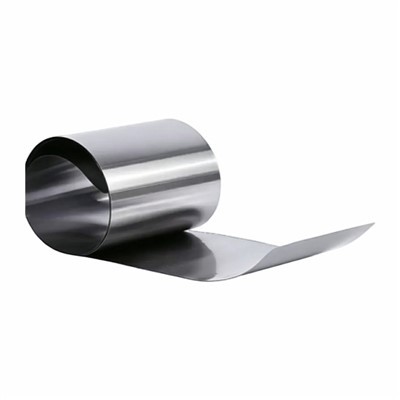
If you need titanium fasteners for your next project—whether it’s a custom bike build, a marine repair, an aerospace assembly, or something in between—we’ve got you covered. We work with small custom shops and big corporations alike, so just reach out to us to talk through your specs, quantity needs, and any custom finishes or testing requirements. We’ll make sure you get the right fasteners, on time, no headaches.
Molybdenum Heating Elements References
- Titanium Fasteners: Manufacturing and Applications. International Titanium Association, 2022.
- Cold Heading of Titanium Alloys. Journal of Manufacturing Processes, vol. 45, 2020, pp. 789-797.
- Anodizing of Titanium for Corrosion Resistance. Surface and Coatings Technology, vol. 378, 2019, p. 124987.
- Quality Control Standards for Aerospace Fasteners. SAE International, 2021.
Address: Wangjing Science and Technology Park, Guangshun North Street, Chaoyang District, Beijing
E-mail: sales@moly-tungsten.com
WebSite: https://www.moly-tungsten.com/
